
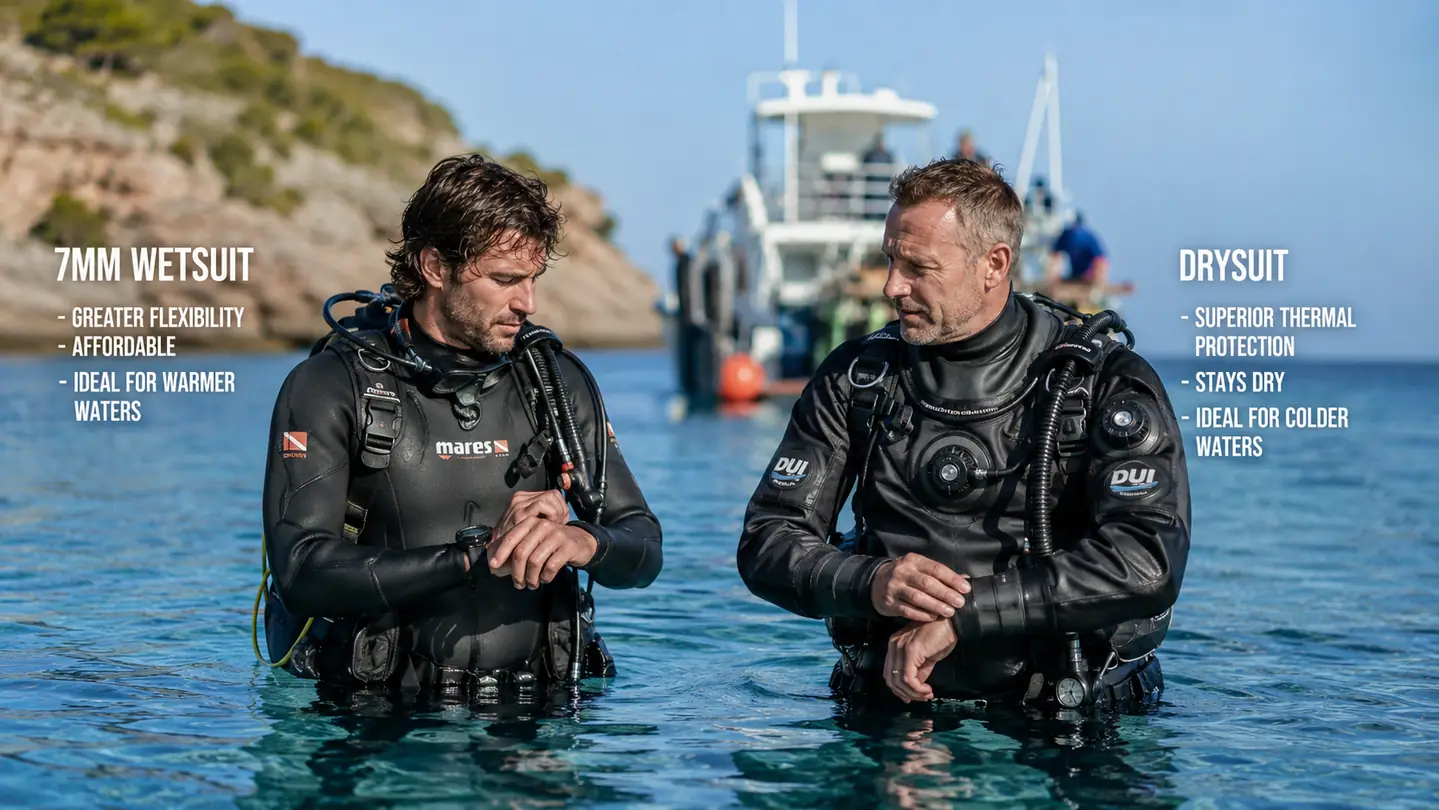
Let me give you the conclusion first, the way I would if we were standing at my workbench: if the water you dive sits in the 50s and you are paying for your own gear, the 7mm wetsuit is the right answer, and it is not close. If your water runs in the 40s for months at a time, the drysuit stops being a status symbol and becomes a real tool. What that time taught me is not what the dive counters tell you, so let me walk you through it the way I would explain a job to a client. I am Ray Merritt, a carpenter by trade and a recreational diver by choice, and I have spent two cold seasons diving the Mares M-Flex 7mm in a quarry that barely breaks 55 degrees by late spring. I borrowed a friend's drysuit on the same water, in the same months, long enough to get a fair taste of both worlds, because no one should take a parking-lot opinion over measured water time.
Both suits solve the same problem two different ways, and understanding that split decides the whole argument. A wetsuit traps a thin layer of water against your skin and lets your own body heat hold it there, so the thicker the neoprene, the later the cold arrives. A 7mm is about as thick as a recreational suit can go before getting it on becomes a wrestling match. A drysuit works the other way, it keeps the water out entirely and carries the insulation in the under layer beneath the shell. Both keep you warm on a cold day, but they cost different money, demand different skills, and buy very different amounts of time underwater. It is not really wetsuit versus drysuit at all, it is your calendar versus their limits.
Here is the honest version, row by row, the way I would lay two tools on a bench and tell you what each one does. I am not scoring this like a brochure and I am not protecting either camp. The wetsuit wins the rows that a weekend diver actually lives in, the drysuit wins the rows that only arrive with serious cold, and one row is a fair tie, which is as honest as the trade gets.
| Mares M-Flex 7mm | Drysuit | |
|---|---|---|
| Price at today's check | A fraction of what a drysuit runs, and the suit is the whole system | Several times the wetsuit's cost, plus undergarments, hood, and boots on top |
| Fiercest cold you can honestly dive | Comfortable through the mid 50s with a hood, below that the minutes get counted | No practical winter limit with the right under layer, it handles the water that ends a wetsuit day |
| Time before the cold gets you | In 48-degree water a good first 40 to 45 minutes, then the cold starts finding you | Two-hour dives in the same water as long as you stay dry inside |
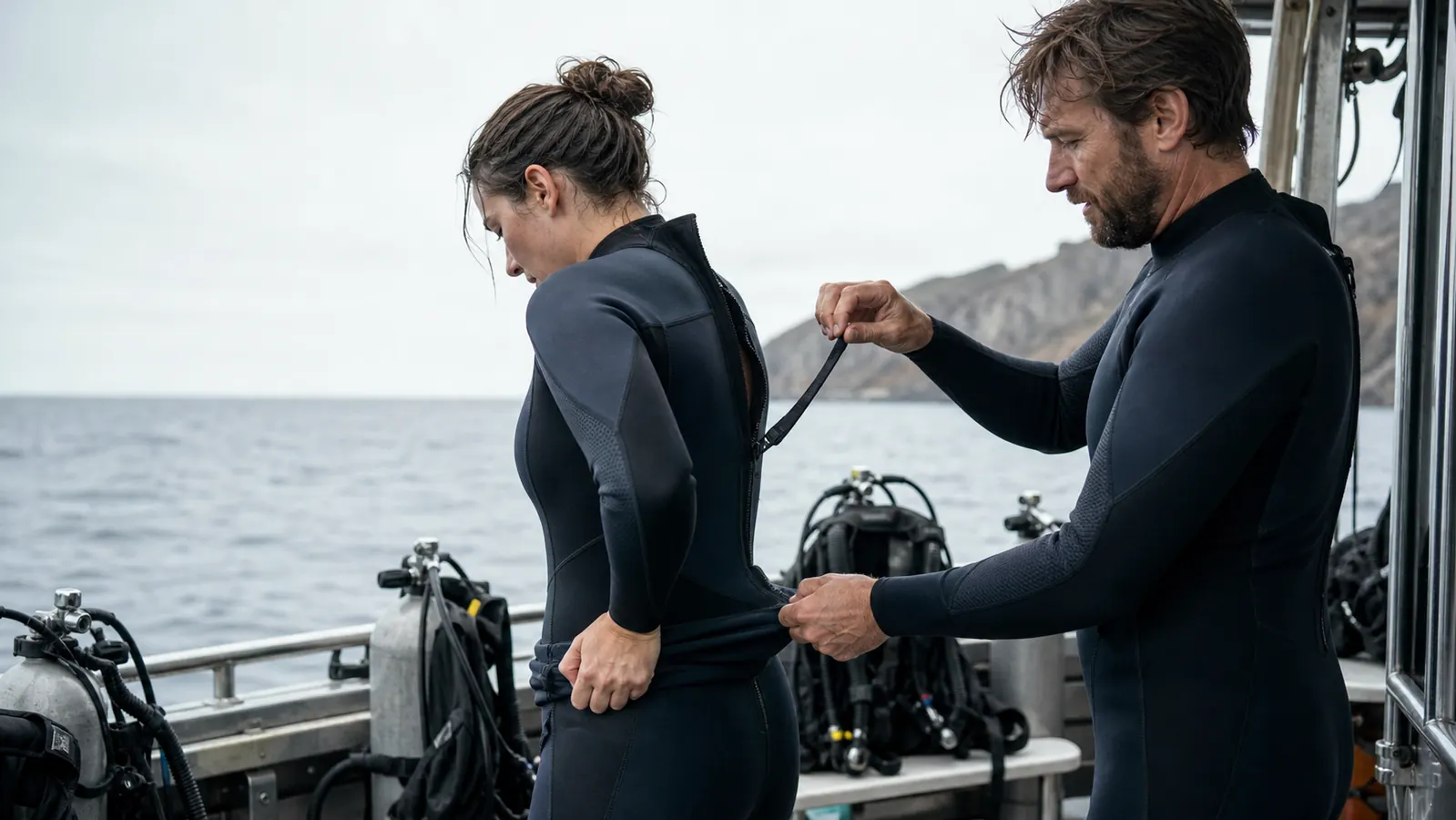
| Getting in and out | A pull to get on, but one piece and nothing else to manage | Under layer first, then seals, and a back zip that wants a helper |
| Training needed | None beyond a hooded fit, the simplicity is the whole appeal | Most outfits expect a drysuit course or a checkout because the air bubble needs managing |
| Managing the air | No trapped gas to fight, buoyancy feels like the summer suit you already know | The air bubble moves on you, down into the feet and up to the neck, diving it is a real skill |
| Care and maintenance | Rinse in fresh water, hang in the shade, and watch the knees | Seals and the main zipper age and get replaced, plus valve work every few seasons |
| Lifespan and repairability | Neoprene packs down and loses its loft after a few hard seasons | A shell suit gets patched, re-sealed, and serviced for a decade or more |
| Best for | The weekend diver who wants the cold seasons back without a second system | The year-round diver who plans long repeating dives in truly cold water |
Where the Mares M-Flex 7mm Wins
It wins on money before it wins on anything else, because there is no argument to be had. At today's price the Mares M-Flex is one suit and the whole system, the insulation rides inside the neoprene so there is no under layer to buy. A drysuit, by the time you stack the shell, the under layer, the fittings, and the instruction, costs several times as much before it has made its first dive. I price a job the same way I price a season of diving, and that gap buys a lot of boat days, even in the cold months.
It is also a simpler suit to own, and that simplicity is a real feature, not a marketing line. The M-Flex goes on over my shorts, the zip runs, and it works. Its entire maintenance is a fresh-water rinse and a hang dry in the shade. It needs no specialty certificate, it does not live at the mercy of seven seals and a valve, and the trust is in the neoprene itself. A man who has spent a lifetime choosing hand tools that do not need a manual will tell you that is worth money on its own. Thick neoprene, sewn right, is that kind of tool.
The diving side held up too, which is the part no spec sheet admits. In that quarry, the 7mm with a proper hood kept me comfortable through the mid 50s, exactly the band where most weekend winter divers actually swim. The cold arrives slowly and you feel it first in the hands and the face, not the core, so you can read your own limits instead of having them dictated by a number on a chart. Mares builds the M-Flex the way I build trim, nothing clever, just thick material put together where it needs to be. Three seasons in, mine still fits like the first day, and the suit still packs flat enough to join me on a flight without claiming the whole bag.
Where the Drysuit Wins
Now let the drysuit take its turn, because it earns it. Below about 50 degrees, my 7mm is on the clock, and below 45 it is a race. The water pushes through the neoprene and flushes warm water off your skin, and the minutes get counted whether you like it or not. A drysuit with the right under layer does not care about any of that. I have sat on a wreck in water near 42 degrees for close to two hours and come up fresh, when that same dive in the wetsuit would have been a forty-five minute about-face. If genuinely cold water is a normal part of your week, the drysuit is the right tool, full stop, and I will not pretend otherwise to sell you anything.
It wins the all-day battle too, and every drysuit owner remembers the moment they noticed it. In the wetsuit, the cold starts again the second you hit the ladder, and wind on the surface is a constant bill for the rest of the day. In the drysuit you climb out dry, so the boat ride and the gaps between dives become the pleasant part of the day instead of a shivering countdown to the next entry. Over a weekend of repeated dives that difference compounds, and it is the reason drysuit divers stop calling it gear and start calling it a comfort of the sport.
There is also a quiet durability win that nobody mentions at the counter. Neoprene packs down, loses its loft, and after three or four hard seasons most 7mm suits are a shadow of what they were when new. A drysuit shell with a torn knee or a tired seal gets patched, re-sealed, and serviced, and a well-kept suit runs a decade or more. I respect that even from the parking lot, because I hate retiring good tools early, and a drysuit does not retire on a calendar.
The 7mm that gives the cold season back to you
If the cold water near your house mostly lives in the 50s, the Mares M-Flex is the 7mm I trusted through two winters with nothing more than a rinse and a hang. Check today's price on Amazon and see whether that season deserves a spot in your bag.
Amazon Check Today's Price on Amazon →Who Should Buy Which
Buy the 7mm if most of your diving happens in the 50s or warmer, if keeping the price difference in your pocket sounds good, and if you like that there is no certificate and no second system to ride along. That describes the majority of divers who ask this question, and there is no shame in the honest answer. Buy the drysuit if your typical water rests in the low 40s, if you dive deep and long, and if a course and a bag of seals sit comfortably with you. Both are proper tools. They are simply not the same bet on the water.
You can also start with the wetsuit and stay a happy cold-water diver your whole life, which is a fine answer, because the 7mm is not a starter suit. If the bug bites harder, add the drysuit later the way I did, and keep the neoprene for the edges of the season. That is how the realistic crowd arranges it, the wetsuit handles the months when the water is catching up, and the drysuit takes the months that stay cold all year.
Take the suit that puts you in the water more often. I have watched a diver with a fine drysuit never trust it, and give up by January, and I have watched a diver in a budget 7mm love his February. On cold water, the suit that actually gets you diving is the better suit, whatever it costs. At today's price the Mares M-Flex opens a long season from a budget that a drysuit setup would close. It is the one I reach for, and I suspect it will be the one you reach for too. If that person is you, the honest next step is not a bigger purchase, it is a better fit in the suit you already want to wear.
The wetsuit wins the count of days. The drysuit wins the worst of them. Be honest about which days you actually dive.
What the Spec Sheets Leave Out
I read a spec sheet the way I read a lumber list, and the two suits never tell the whole story on paper. The wetsuit does its best work on the surface between dives, when you stand in the sun eating lunch and the suit dries on you instead of holding a puddle of sweat. The drysuit does its best work at depth, where the water would rob a wetsuit diver in minutes. Neither sheet tells you how much easier a wetsuit is to practice in, or how much extra weight a drysuit demands on the belt before the weighting feels right.
Then there is fit, and both suits punish a bad fit in different ways. A wetsuit that fits loose lets cold water pump through it, and no thickness rating saves you. A drysuit that fits wrong leaks at the seals or traps so much air that you fight the buoyancy all dive. I say the same thing about exposure suits that I say about boots, buy the best fit you can find, because the spec sheet is where the argument starts and the fitting mirror is where it ends.
Three Things Nobody Tells You About Cold-Water Diving
First, the flush. The first time cold water finds the gap at your neck or wrist in a 7mm suit, you feel it down your whole back, and it is easy to read it as the end of the dive. It is not the end. That layer settles and warms against your skin, and the dive goes on fine. A new cold-water diver has to let the suit do its job for a minute, the way a rookie carpenter flinches at the first kick of a circular saw and then learns to lean into it. Panic in the first five minutes and you will never give the season a fair chance.
Second, the hood is the real thermostat. A 7mm suit keeps working at surprising temperatures when the hood fits snug and you protect your hands and feet, because most of your heat leaves through the head and the extremities. I put more thought into my hood and gloves these days than into suit thickness. Third, plan for the cold on the surface, not just underwater. A slightly shorter dive in a wetsuit beats a long dive followed by a shivering surface interval, because the second dive of the day is the one people actually skip, and that planning extends your season more than any gear ever will.
The Bottom Line
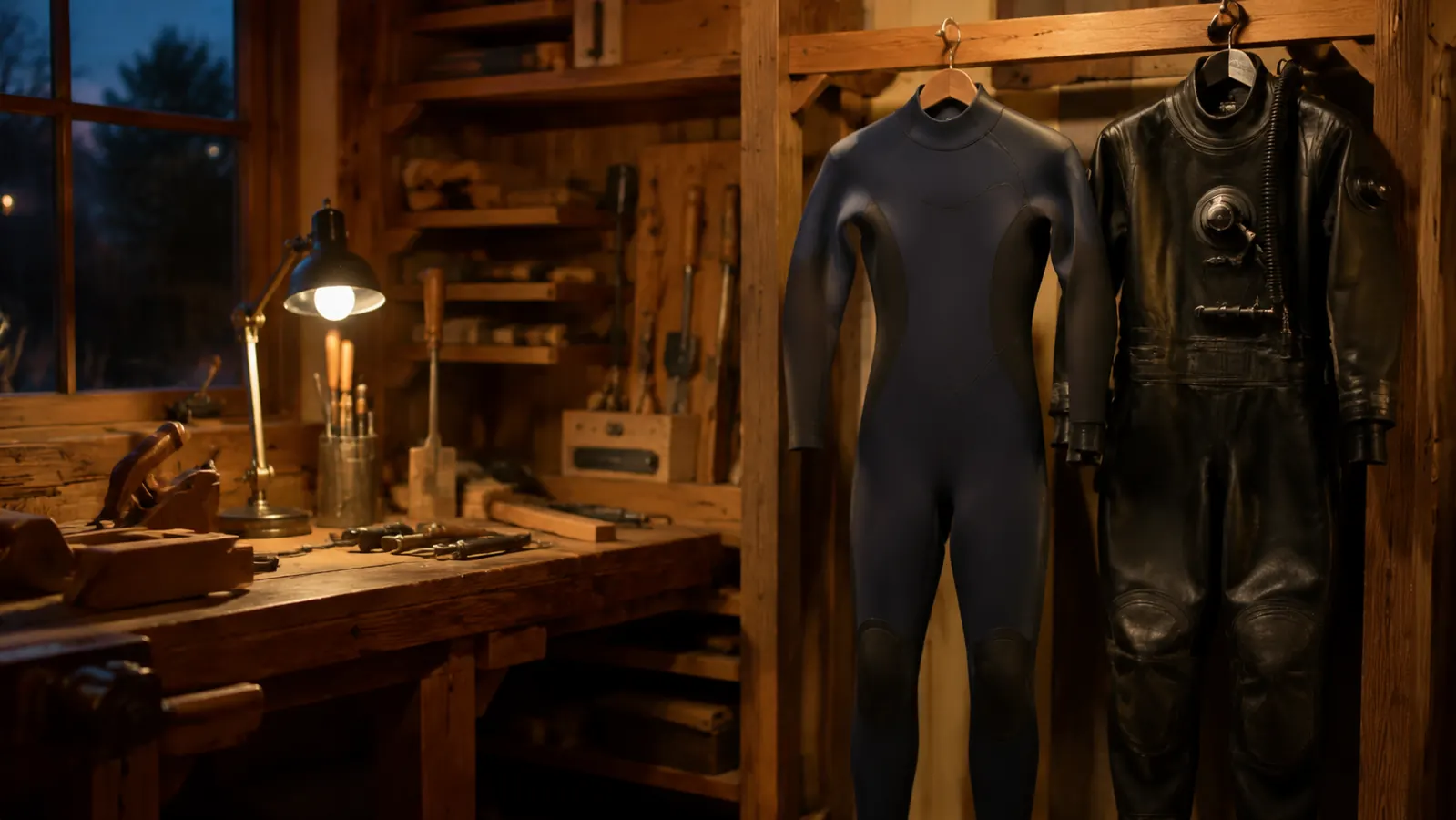
Here is where I land, and it matches how I buy tools. I do not buy the biggest hammer on the wall, I buy the one that fits the work I actually do. My diving is recreational, mostly above 50 degrees and under an hour, and the Mares M-Flex handles that work beautifully for a small fraction of a drysuit's cost. The day I book a week where the water hangs at 45, I will take the drysuit course and buy the right shell, and I will not resent the expense. Until then, my suit hangs in the shop next to my tools, rinsed and aired, and the quarry lot can argue without me. If this is your first season of cold water, start with the wetsuit, save the drysuit for the year the water earns it, and get more dives in the meantime. That is the straightest answer I have.
The honest 7mm for cold-water recreational diving
Mares M-Flex 7mm, one-piece and flexible, built to handle a season of cold-water dives without a second system. Check today's price on Amazon.
Amazon Check Today's Price on Amazon →