
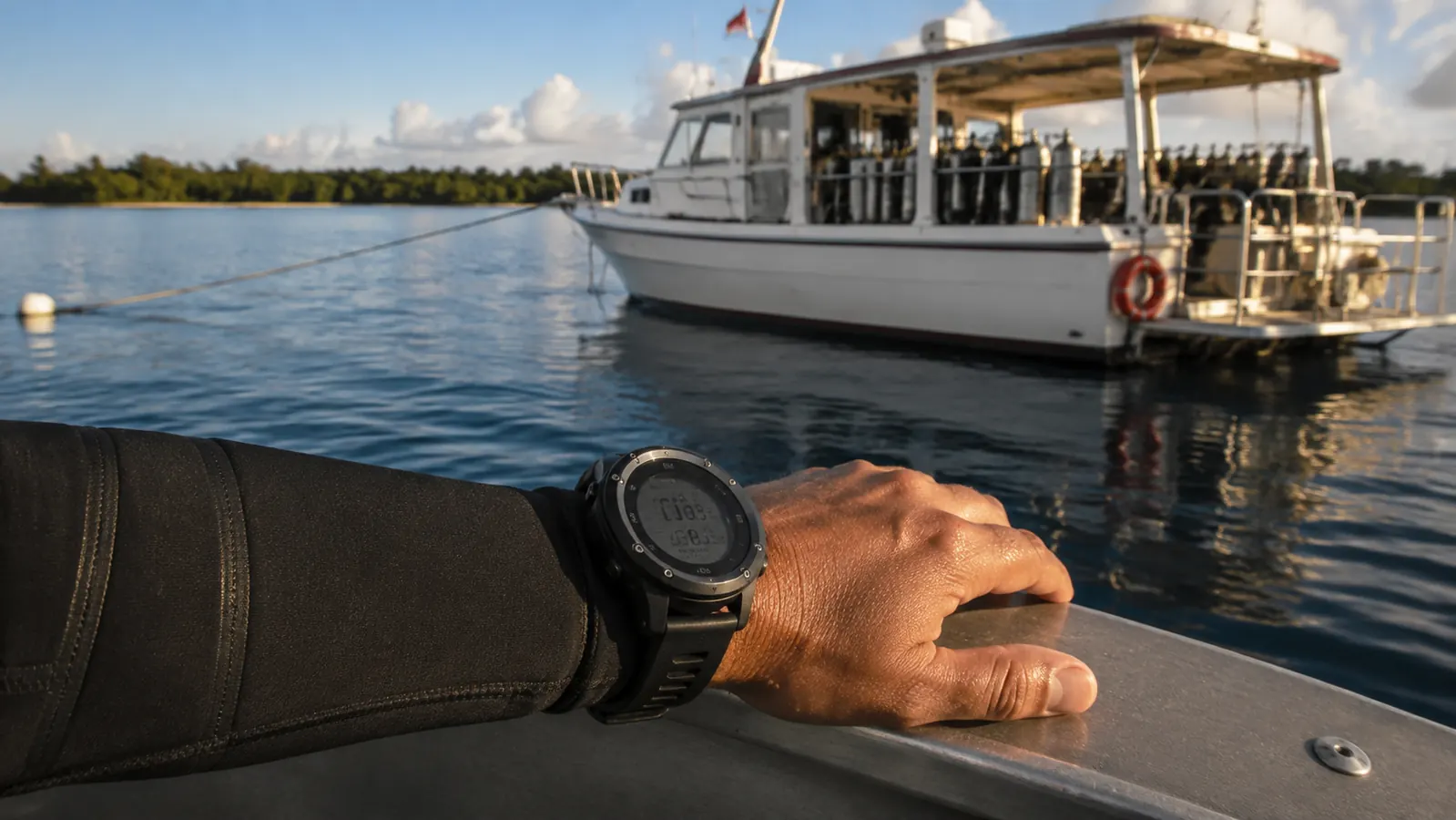
There is a scratched-up rental dive computer hanging on a hook in my shop, and I keep it around as a reminder. For the first several years I dove, renting was the whole plan: take whatever the boat handed me and hope it read straight. You know how that goes. A display you can barely see through the scratches, a battery that starts blinking on the second dive, buttons somebody else's heavy gloves already mashed flat. And on one cold, dark wreck dive, the rental unit stopped giving me a number I could trust, and I spent the last ten minutes of my no-stop limit counting it off in my head like a carpenter measuring twice. That was the trip I decided I was done gambling with my nitrogen. I went home, did the boring research, and bought the Cressi Leonardo 2.0 the way I have bought more than one used table saw, because the evidence that a lot of people trusted it was right there in the review count.
Three seasons later that same computer is still on my wrist, and I have 140 dives on it. Some of them were twenty minutes of low-visibility quarry water in late October. Some of them were a hundred feet down on Caribbean wrecks. The computer treated both the same way: quietly, accurately, and without fuss. It is not the flashiest unit on the gunwale. It is the one that reads true on every single dive, and in my line of work that is exactly what I pay for. Here is what three seasons taught me.
The Quick Verdict
The most dependable dive computer I have strapped on in decades of diving. Dated interface, no Bluetooth, and none of that matters, because the numbers it gives you are numbers you can plan a whole trip around.
Amazon Check Today's Price →The dive computer that ended my rental gamble
It turned out to be exactly as boring and dependable as I hoped. Big digits, one button, nitrox, and a battery I changed myself in under five minutes. If you are done renting other people's luck, start here.
Amazon Check Today's Price on Amazon →How I've Used It
I test dive gear the way I test a new chisel. I do not take the manufacturer's word for it and I do not take the dive shop's word for it, I use it. So the Leonardo sat in the bottom of my gear bag for the first few dives while I kept its numbers in my head and compared them against a rental computer on the other wrist. Quarry dives, shallow, no risk. It agreed with the rental every time, which is more than the rental agreed with itself.
Then I trusted it on the dives that matter. My home water runs cold enough in late fall that I pull on the gloves and dive EAN32, and the Leonardo handles a nitrox mix without a second thought. I have run it on repetitive days offshore, four and five dives a day, with surface intervals I was careless about, and it has never cleared early and never held me in a decompression window I did not expect. Three seasons and one battery change, done on the workbench with no special tool and no trip to the shop.
For the record, I keep my dives in a paper logbook, numbered in pencil the way I catalog my baseball cards. The computer agrees with the logbook and the logbook agrees with the computer. That consistency, dive after dive, is the thing I trust most about it.
One Button, Big Numbers, and No Reading Glasses Required
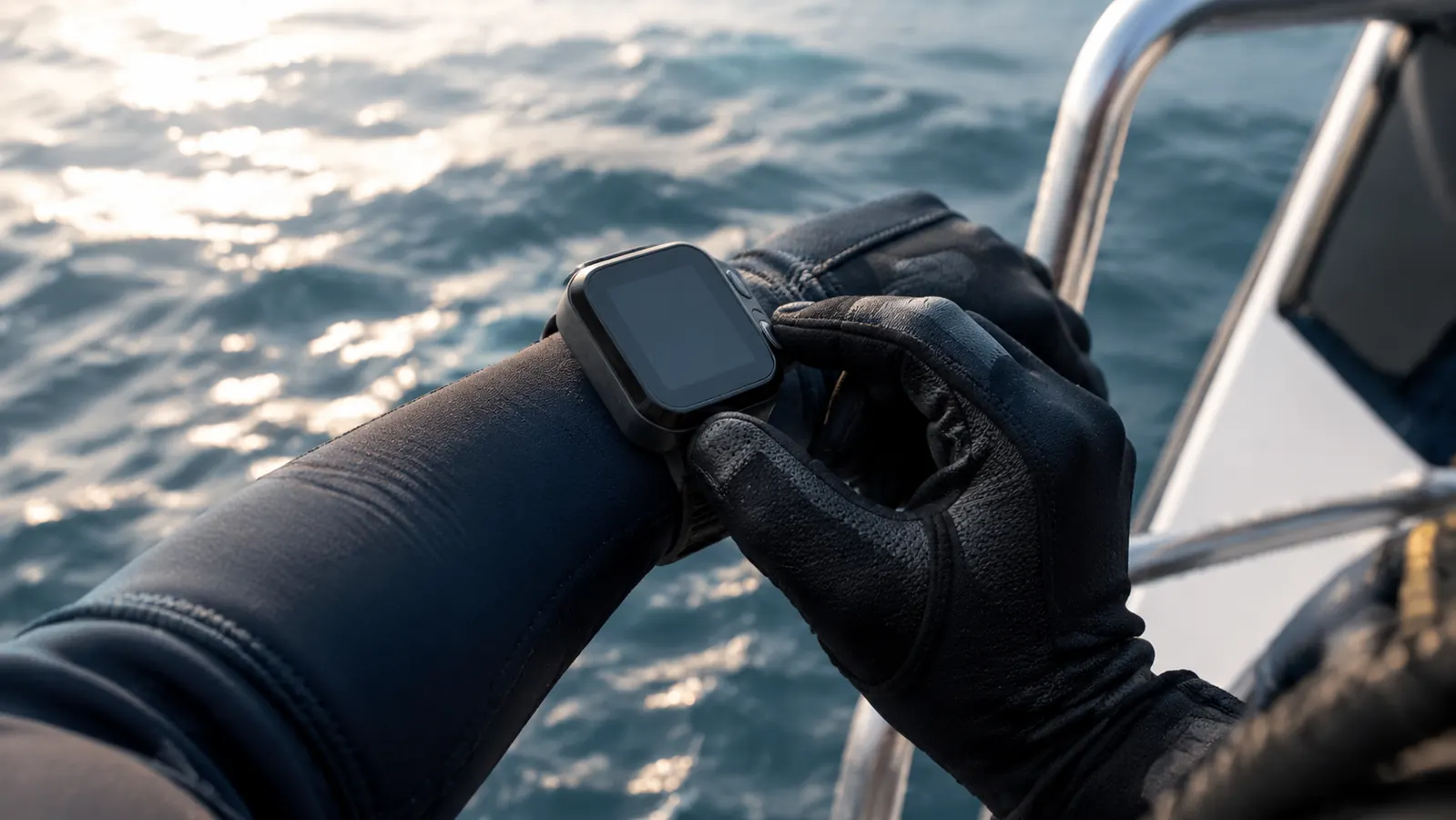
The Leonardo has one button. That sounds like a compromise until you try to scroll through a color-screen menu wearing thick wet gloves in poor visibility. One button means one thing to press in the dark, and you learn the pattern in about three dives. Tap for the next screen, hold for the menu, hold longer to confirm. It is not elegant, but it is honest, and honest beats elegant when your hands are cold.
The digits are the real story. I am at the age where small print needs a longer arm, and some of the newer wrist units read like they were designed for somebody with twenty-year-old eyes. The Leonardo's numbers are big, plain, and high contrast. I can read my remaining no-stop time at a glance without breaking trim, and on the darker wreck dives the backlight keeps it legible without washing out the rest of my night vision.
One button also means one thing that can break, and after three seasons of pressing it with gloves, quarry silt, and an occasional impatient thumb, it still clicks the way it did on day one. I have drowned wristwatches that cost more than this computer. This one takes the abuse and keeps going.
Nitrox in the Winter, Batteries on the Workbench
Cold water shortens your no-stop time in a hurry, and the Leonardo's algorithm is a conservative one. It clears slower than some of the newer color units, which means on a busy week of diving I come up a few minutes before the guy wearing the screen with the pretty graphs. I used to resent that. Then I read my logbook and remembered that the guy wearing the screen has spent more than one vacation sitting out the next dive because his unit locked itself out. I plan around a computer that lets me dive. The Leonardo has never once grounded me.
When the low-battery symbol finally showed up, I looked up the procedure, bought the standard cell, and swapped it in well under five minutes on the bench. No dive shop visit, no shipping the unit off, no week without your computer in the middle of a trip. Cressi designed the battery access for a guy like me, a guy who owns a screwdriver and does not like being told to mail things away. For anyone who values maintaining his own gear, that alone is worth a good share of the price.
A Week of Dives, Day After Day
The trip that sold me on this computer was a week of wreck dives in warm water, four and five dives a day with the kind of surface intervals that happen when the boat crew is being honest about the current. Six days, more than twenty dives, and the Leonardo never once cleared early and never once forced a skip. I watched divers on other computers sit out the afternoon because their units had locked them out for the day. I sat out exactly zero dives that week.
The part I did not expect was how much planning it lets you do. Because the Leonardo gives me the same honest number every morning, I ran the week's plan the night before, the way I lay out a job before I pick up a saw: which profile on day one, how much gas to carry on day three, when to rest on day five. Dive computers are sold as safety gear, and they are that, but the real gift is that they let you think about a whole trip before you get wet.

What Three Seasons of Salt Actually Did to It
Salt water is the truest test of gear there is, harder on equipment than any job site I have worked. It has softened zippers, corroded buckles, and quietly killed more electronics than I can count. The Leonardo's housing has held up. The strap shows the same honest wear any good tool shows, but the lens is still clear, the button still clicks, and no water has ever found its way inside.
I rinse it with fresh water at the end of every dive day, the same way I wipe down a hand tool so it does not rust, and that is the whole maintenance routine. No oil, no fuss, no yearly service. It has bounced around the back of my truck, gone through airport luggage, and lived through a week of salt spray on the dive deck, and it still reads the way it did the first week I owned it.
A dive master on one charter had a fancy unit go dark on him two dives into the week. He spent the afternoon on the surface with a backup watch, annoyed at a screen that needed an update mid-vacation. I packed a spare battery and did not think about my computer again until the boat ride home. Moments like that are why I stopped shopping for features and started shopping for dependability.
The Tradeoffs Nobody Mentions in the Reviews
Now the honest part, because every review has a back side. The interface genuinely is dated. There is no color, no app, no Bluetooth, no wireless transfer, so after a trip you copy your dives down by hand the way I do, and if you expect a computer that talks to your phone, this unit will frustrate you. The single button means menu digging when you want to change a setting, and under thick cold-water gloves that button takes real pressure. And the conservative algorithm clears sooner than the fancier units, so if everybody on the boat buys a color screen, you will occasionally be the first one up from the wreck.
I have looked hard at the alternatives, including the Suunto D5 that everybody seems to be wearing, and you can see exactly how that comparison shook out in my writeup of the two. The short version is that when something fails on a dive trip, the expensive unit has more to lose. For what I ask of a computer, which is to tell me the truth when I am at depth, the Cressi has never once let me down.
In the interest of fairness, there are two things I would genuinely like. A proper wireless log would save me fifteen minutes of pencil work after a long trip, and a color screen might make the graphs marginally easier for older eyes. Neither of those has ever made a dive better. What makes a dive better is trusting the number on your wrist, and that number has been right for 140 dives.
What I Liked
- One button and huge, high-contrast digits I can read without my reading glasses
- Runs the EAN32 I dive all winter without a second thought
- User-replaceable battery, swapped on my workbench in under five minutes
- Conservative, consistent algorithm that has never cleared early or locked me out mid-trip
- Three seasons of salt, silt, and luggage and it still reads true
Where It Falls Short
- Dated interface, no color, no app, no Bluetooth, no wireless log transfer
- Single-button menu navigation takes a few dives to learn
- The button needs real pressure under thick cold-water gloves
- Clears sooner than the newest color screens, so dive buddies may stay down longer
One hundred and forty dives, three seasons, one battery swap, and it has never once given me a number I did not trust.
Who This Is For
If you are a recreational diver who wants a computer that simply works, this is it. If you hate mailing your gear away for service, if you dive nitrox, if you like big readable numbers, and if you would rather spend your money on actual dives than on screen technology, the Leonardo belongs on your wrist. And if you are still on the fence about whether you need your own computer at all, I put together the whole case for owning one before your next trip.
I would also hand this Cressi computer to a newly certified diver without hesitation, because it removes the biggest variable on a young diver's checklist. I would hand it to a veteran who is tired of paying for chips and screens he does not use. If you dive a few times a season or a few times a month, and you never plan to go below your recreational limits, the Leonardo covers everything you will actually encounter.
Who Should Skip It
If you want your computer to sync with your phone and draw pretty graphs, skip it. If you have moved into technical or decompression diving and need multiple gases, this is not that computer. If you log everything wirelessly and resent writing anything by hand, you will be annoyed. And if bright color screens and a compass built into the bezel matter to you, spend the extra money, just know what it is buying you: features, not necessarily a truer reading.
One more honest note. If the rental computers have never let you down, or if you only dive once a year with the same shop, the argument to buy your own is weaker and you already know it. And if you feel in your gut that you will eventually want the technical route, buy that computer now instead of buying the Leonardo and replacing it later. It is better to overbuy once than to buy twice.
Three seasons and 140 dives later, it is still the one on my wrist
You can spend a lot more on a color screen and wireless syncing, and a good share of it is nice to have. I would rather spend it on air. If you want the dependable workhorse that got me through three seasons of cold water and two trips south, today's price is worth a look.
Amazon Check Today's Price on Amazon →