
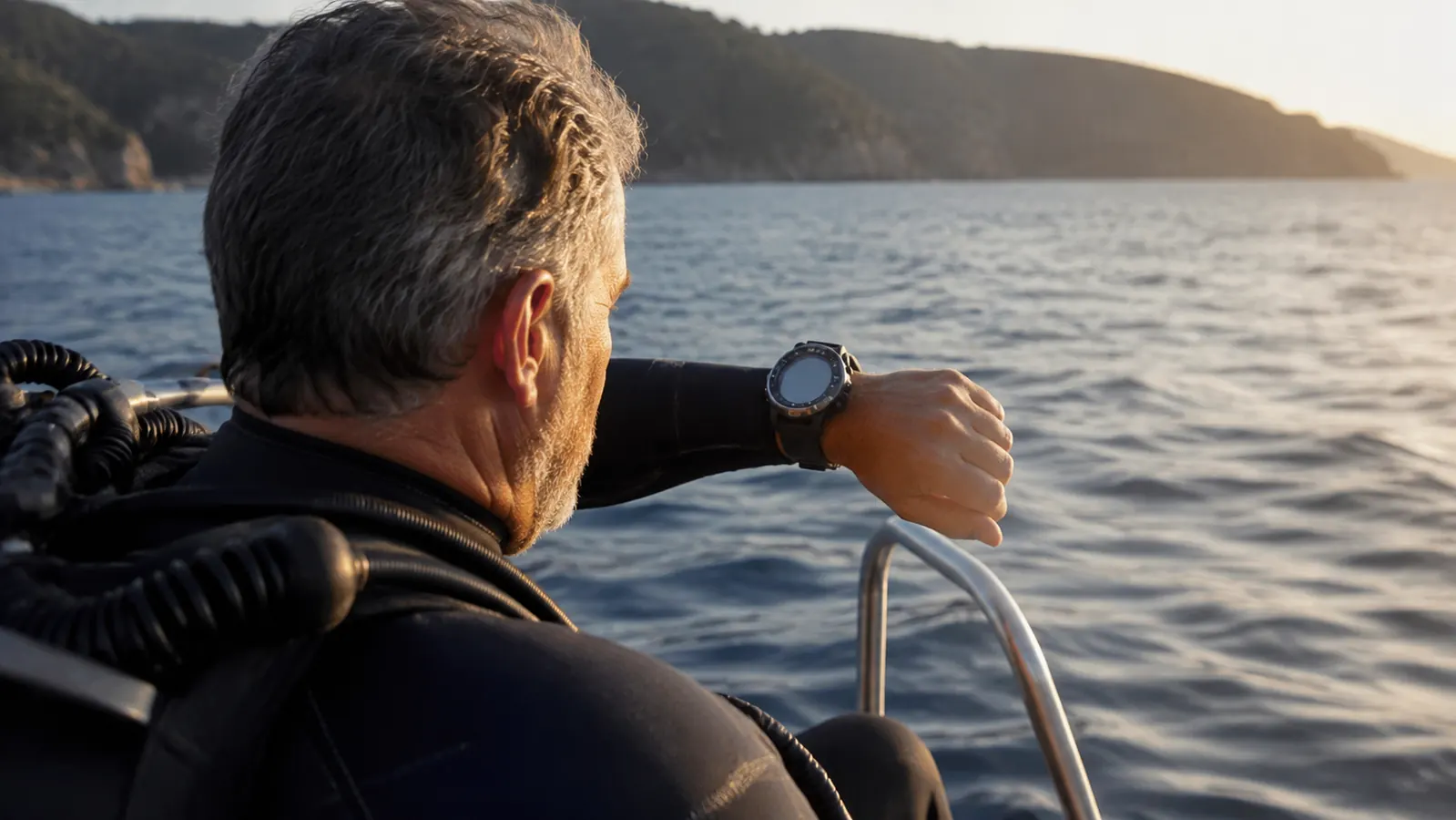
Read 3,500 reviews of the same dive computer and you will learn some good things, but own that computer for three years and you will learn the rest. Most of the five star reviews are written in the first month, before the battery door has been opened and before the buttons have been pressed by a cold wet hand. The review that matters comes from the hundredth dive, when the shine is gone and all you have left is the tool and its habits. That is the review I can give you today, and it reads different from the one the star count promises.
The straight answer up front: the Cressi Leonardo is the best dive computer for the money I have ever owned, and I have owned three units in this class, so that is not a guess. It is not the flashiest thing on the boat and it was never meant to be. It is the one you forget you are wearing, and for a dive computer that is close to the highest compliment there is. It holds your no decompression limit, shows depth and dive time, and keeps a log of every trip without asking for anything back. But the price of that quiet confidence is paid in small details that the five star reviews never carry, and those are the ones we will go through one at a time.
The Quick Verdict
A solid, unglamorous workhorse that earns its 4.2 star average honestly and keeps earning it long after the color screens have gone back on the charger. It will not make you the hero of the dock, and it will not disappoint you. If you dive for the time in the water instead of the view on your phone, this is the computer for you.
Amazon Check Today's Price →The dive watch that has spent a decade on more rental wrists than anything else in its class.
The Leonardo is the best selling dive computer of its generation for the most boring good reason there is: it keeps working. One battery a season or two, no shop visit, no software updates, nothing to feed it. Whatever the price is today, the first season of dives pays for it. Check that price before you let anyone walk you over to the color displays.
Amazon Check Today's Price on Amazon →How I've Used It
I am Ray Merritt, 58 years old, a cabinet carpenter by trade and a diver every weekend the water gives me. The last three seasons have put 186 dives on this exact wrist, every one of them logged to the Cressi. The test was not a gentle one: two old quarries that touch around eighty feet in the deep corner and sit in the mid fifties almost all year, a clear Florida spring on the annual trip, and a fall reef run that holds around a hundred. Cold, silt, current, plenty of chances for a small failure to show itself. The watch has come through all of it without a pause.
The routine is the same every trip. On the boat I choose the gas, air on a plain dive or a nitrox mix on a long one, and step the watch into the right mode. From then on all I ask of it is to keep me honest. The no decompression limit is the number I live by underwater, and the watch shows it large enough to read in a glance even in old quarry water. The menus are short and the buttons sit where my thumb already rests. I have read the manual once, the first night, and that is the whole story of the interface.
The piece I use more than I expected is the surface interval timer. Between two dives the watch sits in a quiet mode and counts how long you have been breathing air, so the second dive of the day starts from a real number instead of a guess out of a damp paper table. It does not chime, does not nag, and is just there waiting whenever I look down at it. That patient silence is half of why this watch wears as well as it does.
The morning that earned my trust was a green water day at the quarry in March. Runoff had the deep corner silted out to a few feet of visibility, my buddy peeled left and I went right, and for twenty minutes we were two echoes in the murk. I read the Cressi the way I read a level in a dark wall: big number, steady hand. Depth held at seventy four feet, the no stop never budged, and when the silt closed back in I came up on the computer's word, not on feel. It was the right call.
The Buttons, and What the Reviews Leave Out
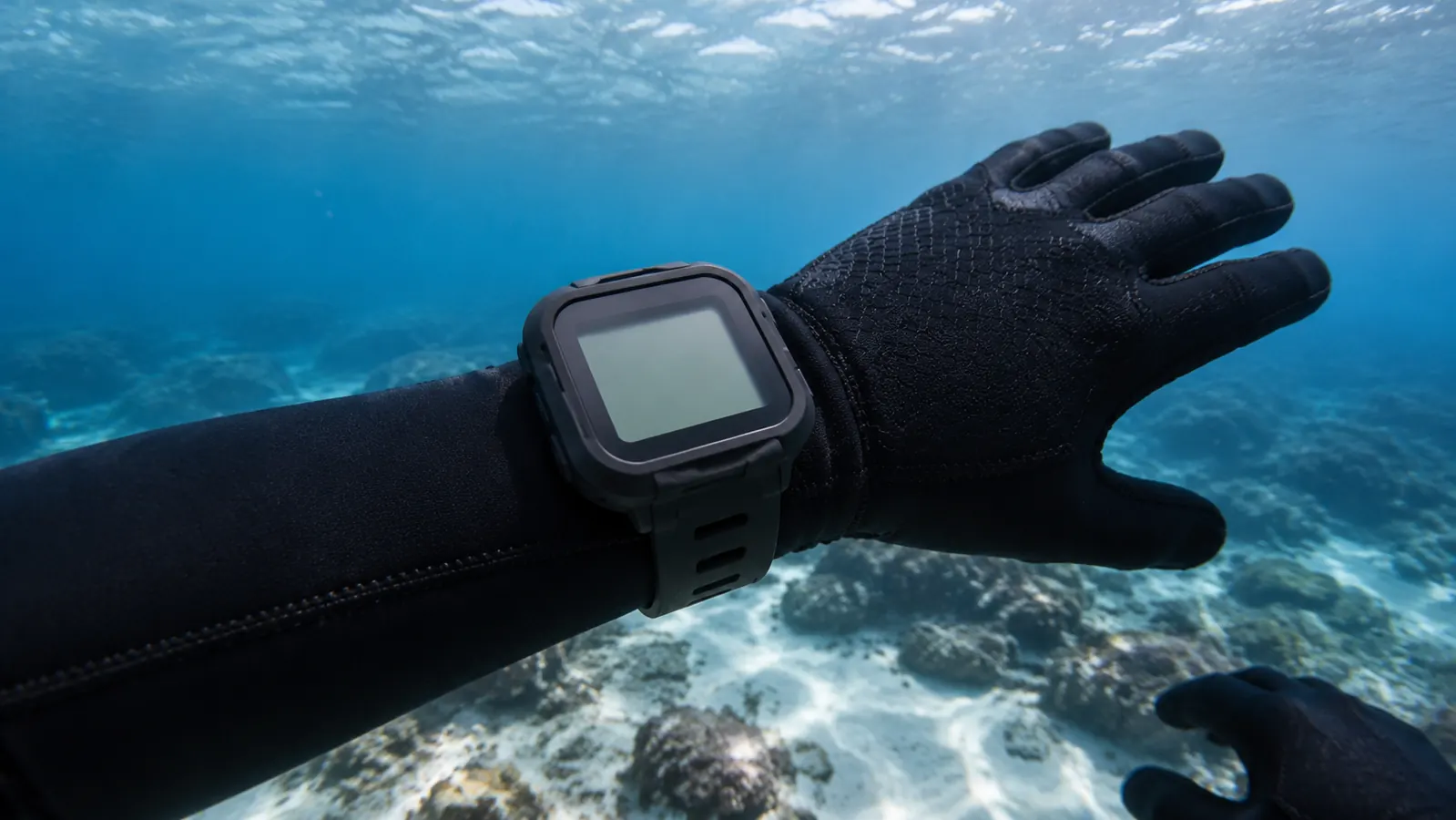
The first thing the reviews do not mention is the buttons. They are small, set into the rim of the case, and they want a deliberate press rather than a little tap. In warm water with thin summer gloves that is nothing. But in the quarry in April, when the water is still in the fifties and you are in five millimeter neoprene, every press is a short negotiation between your thumb and the rubber. You learn the right angle by about dive ten, and it stops being a thought, and then the next cold season arrives and you go back to school for a dive or two. Call it a character rather than a defect, but know it before the first cold day.
The second quiet corner is the backlight. It is an older style glow, not a bright slab of light, and at the bottom of a dark quarry it does exactly what I need it to: the numbers come up and stay readable at depth. What it will not do is beat the noon sun. In bright, shallow water you will find yourself making a shade with your free hand when you want the clock. It is simply the nature of that screen. It is not a reason to send this watch back, but it is a fact you should carry in before you buy.
The Battery Door, the O-Ring, and the One Rumor That Is Actually True
This is the place where the forum threads get loud, and the rumor for once carries a real grain. The Cressi Leonardo runs on a common coin cell that anyone can change at the kitchen table with a quarter, no shop visit, no week in the mail, and that is a strong point in its favor. The piece that sits behind the door is a thin rubber ring, and that little ring is the only thing on the whole unit that the crowd ever seems to trip over.
The closure is a round knurled cap with a coin slot, and the ring lives in a mild groove around its edge. Keep that ring wet and seated and the whole door is as tight as a good lid. My own mistake was at dive 144: I had put in a fresh cell the week before, closed the door on a dry afternoon, and never checked the ring. There was no spectacular flood, but a film of haze crept in under the glass and the battery test started to blink a warning at the bottom of the lift. I finished the dive on the plan, dried the watch carefully, and spent the rest of the trip treating it with the respect it deserved.
The cure is one minute, twice a year. When you open the door for the fresh cell, wipe the edge with a fingertip, dip the ring, set it straight in its groove, and give the cap a firm two turns home. Do that at the start of every season and the computer will live long past the day in the pool beside it. It is the only maintenance this thing will ever ask of you, and it takes so little that it is easy to skip, which is exactly why it catches people.
What Actually Held Up Over Three Seasons
Nothing in the numbers has ever come out wrong. The no decompression read agrees with the paper tables, the depth agrees with what the dive master called from the flag line, and the log has never lost a single dive across three full seasons. I keep a paper record the way a tradesman keeps his account book, and two or three times a season I count the wrist against the pages. It has never shown me a dive I did not make, and in cold dark water that sort of consistency is worth the whole price of a Cressi.
The strap is soft rubber, and after three seasons of quarries and truck beds it shows all the honest wear you would expect, still without a crack or a failed tang. The crystal has taken the usual small scratches of a wrist dive tool and still reads clean, and the case has needed nothing at all. The honest review of this entry, and the whole point of the watch, is what did not happen: there was never a moment when it decided to be the center of attention. That absence is what you are actually paying for in good gear.
On the battery: I have replaced the cell twice in three seasons, once for the start of year two and once before the big fall trip. For a tool that rides on my wrist in the cold for hours at a time, that is a small bill nobody complains about. Two cells across 186 dives, plus one moment I caused myself at the door, is a record I would happily take from any appliance I own.
Salt Gets Into Places You Cannot See
The salt takes up residence where no rinse reaches unless you flush it on purpose. The underside of the strap carries small channels, and after a saltwater week they hold a white crust you can feel with a thumb. The rim around the buttons takes the same crust, and dried, the press goes stiff. I work the buttons under a running faucet at the end of a trip and rinse the strap face up, so the water runs out the channels instead of into them. Once a season, even with a fresh cell, I pop the door and wipe the two brass contacts with a dry cloth. Thirty seconds, twice a year, and that one weak spot never finds you.
The Battery Rumor, and the Restraint This Watch Demands
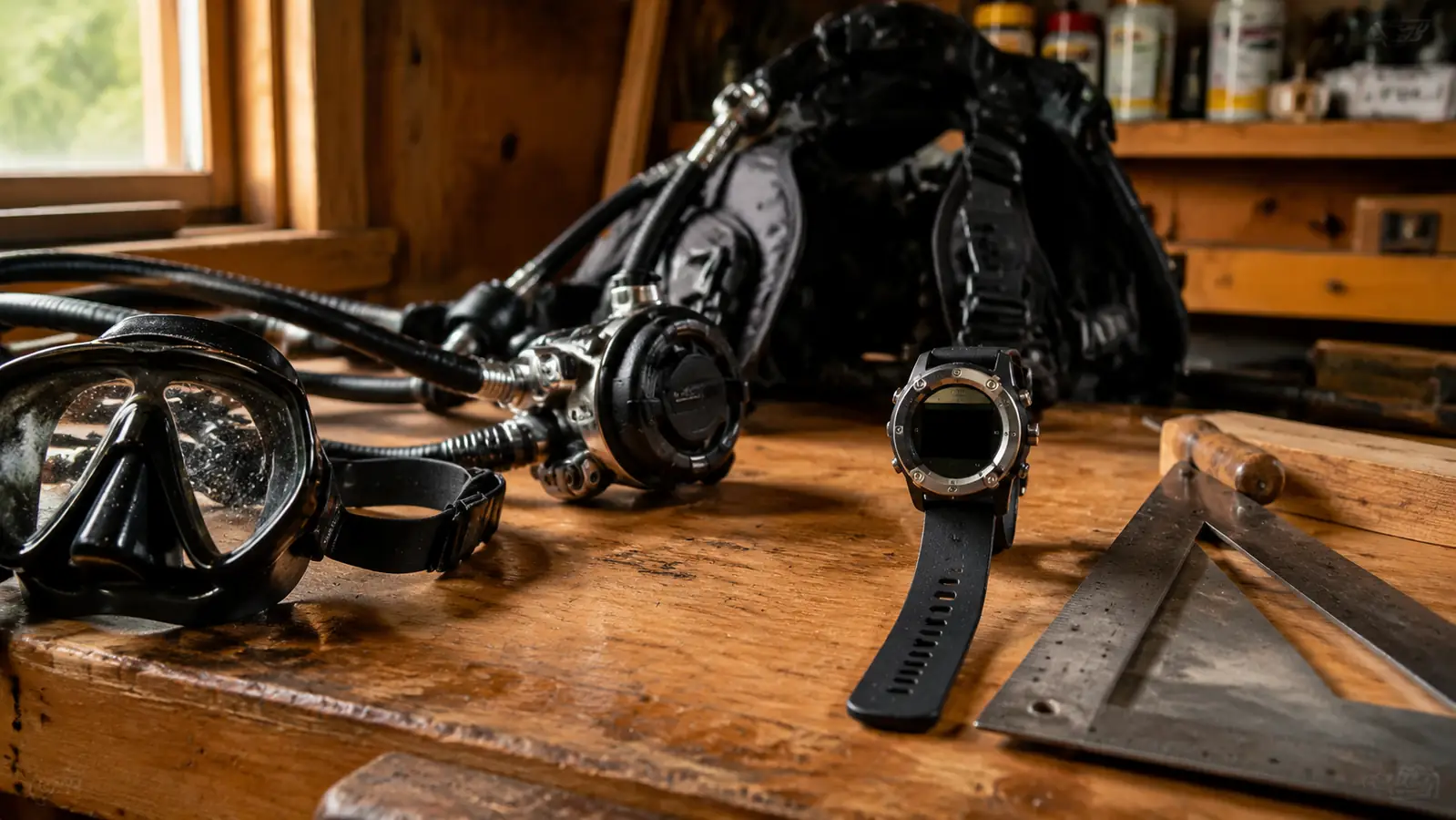
There is a corner of the forums that wishes this watch ran on AA alkaline cells, the kind you grab at a gas station. I get the appeal, but I have watched how it plays out on a cold week: an AA computer eats a fresh pair in three or four dives when the water sits in the fifties, because the cold saps the chemistry and the screen dims by dive four. You spend the trip hunting cells instead of thinking about the dive. The Cressi asks for the opposite habit, restraint. One coin cell carries a whole season. You change it on the workbench in March, you carry one spare in the bag, and you resist the itch to open the door every time the battery test blinks, because every opening is one more chance for the ring to seat wrong.
When a Color Screen Is Actually Worth the Extra Money
The honest answer is yes, but only in some cases. If you are the diver who comes home from the trip and wants every dive pushed onto a phone in color, with a depth profile and a calendar and a map of bottom times, then a modern screen and its app will give you that and the Leonardo will never hand it to you. You will be writing your numbers off the wrist into a book the old way. If you would rather not, then go to the color computer, and enjoy it, no one here will hold it against you.
What I want to add, because the reviews skip it, is how much of that color actually lives on the dry side of the trip. It feeds the sunset photo, the dockside screenshot, and the lunchtime look at your own numbers. None of it appears under the water. Down at depth there is one reading that does the same job in both: your time left in no decompression, and the only difference there is the color of a line. All that color makes for a lovely afternoon in the glare and a quiet read in the dark.
If the map and the app are half your fun, go enjoy them, they are built well. If the dive itself is the whole deal, keep the plain white screen and put the difference into an extra day on the water. That has been the right math for me, year after year: spend on the water, not on the shine.
Should You Buy the Newer Version Instead?
The watch that ships today is the 2.0, so the version question keeps coming up: is it worth the money? If you already own an earlier Leonardo, no, not a cent, the changes are refinements you would hardly notice underwater. If you buy fresh, buy the 2.0 because it is the one on the shelf, not because the difference matters. And if the newer color screens keep pulling at you, reread the color part above: you would be paying for the view, not a truer dive.
What I Liked
- Sets up in seconds on the boat; the air and the nitrox step are a couple of presses, no laptop, no store
- The price today sits under the flashy models in this class, and it outlives most of them
- The no decompression number is large and plain, readable in a single glance in low water
- One coin battery every other season, changed at the table with a quarter
- Strap and case have taken three years of quarries, truck beds and salt without a crack
- Stays silent unless asked, dive after dive, and the log keeps itself on the wrist
Where It Falls Short
- The buttons are small and press by intent, and the first cold dive of every season finds your hand re-earning the angle
- The backlight is an older glow, and in bright sun you will shade the face with your hand to read it
- The battery door and its ring are the one real maintenance trap, and if you ignore them for too long they find you
- No color screen, no app, no maps, and the dive logs stay on the watch
- It brings no glamour to the dock, it is a working tool, not an accent piece
One hundred eighty six dives and three seasons, and the only moment this computer ever gave me was the one dive I caused myself at the battery door. Everything else just did the job.
Who This Computer Is For
This is the computer for the diver who treats gear the way a tradesman treats a good hand plane: it does not have to be beautiful, it has to be true and it has to hold. It is for the diver who sets up once at the dock, forgets the watch exists, and puts all of his attention on the water instead. The Leonardo asks for one coin battery a season, one minute of your surface time in the spring, and nothing else in return. If you put a value on gear that does not need you, this is the scuba tool for you.
Who Should Skip It
Pass on it if the watch is part of the fun. If you want the color, the maps on the phone, the glow of the digital wrist, skip this one and go get the glossy one, and enjoy it, it is good. It is also not for the cave and tech divers, because that work needs the unit to talk to other computers and run a redundant plan, and this is a recreational tool that knows its place. And be honest with yourself about the year reset: if you know you will never once look at that little ring, then the one way this watch can surprise you is exactly how it will.
The whole review in one line: the Leonardo is a tool for people who like tools. If that is your line, it has been a good one, they have been three seasons and 186 dives, and I would buy the same watch today without a second thought.
One battery, sixty seconds a year, and it has not missed once.
That is the whole three season story of this watch: you spend almost nothing on it, and it does the single clean job it was bought for over and over until you stop thinking about it. If today's price is in the range I think it is, the cost of a season of quarry dives pays it back. If this kind of a plain, workhorse tool sounds like your style, go see what it sells for today.
Amazon Check Today's Price on Amazon →