
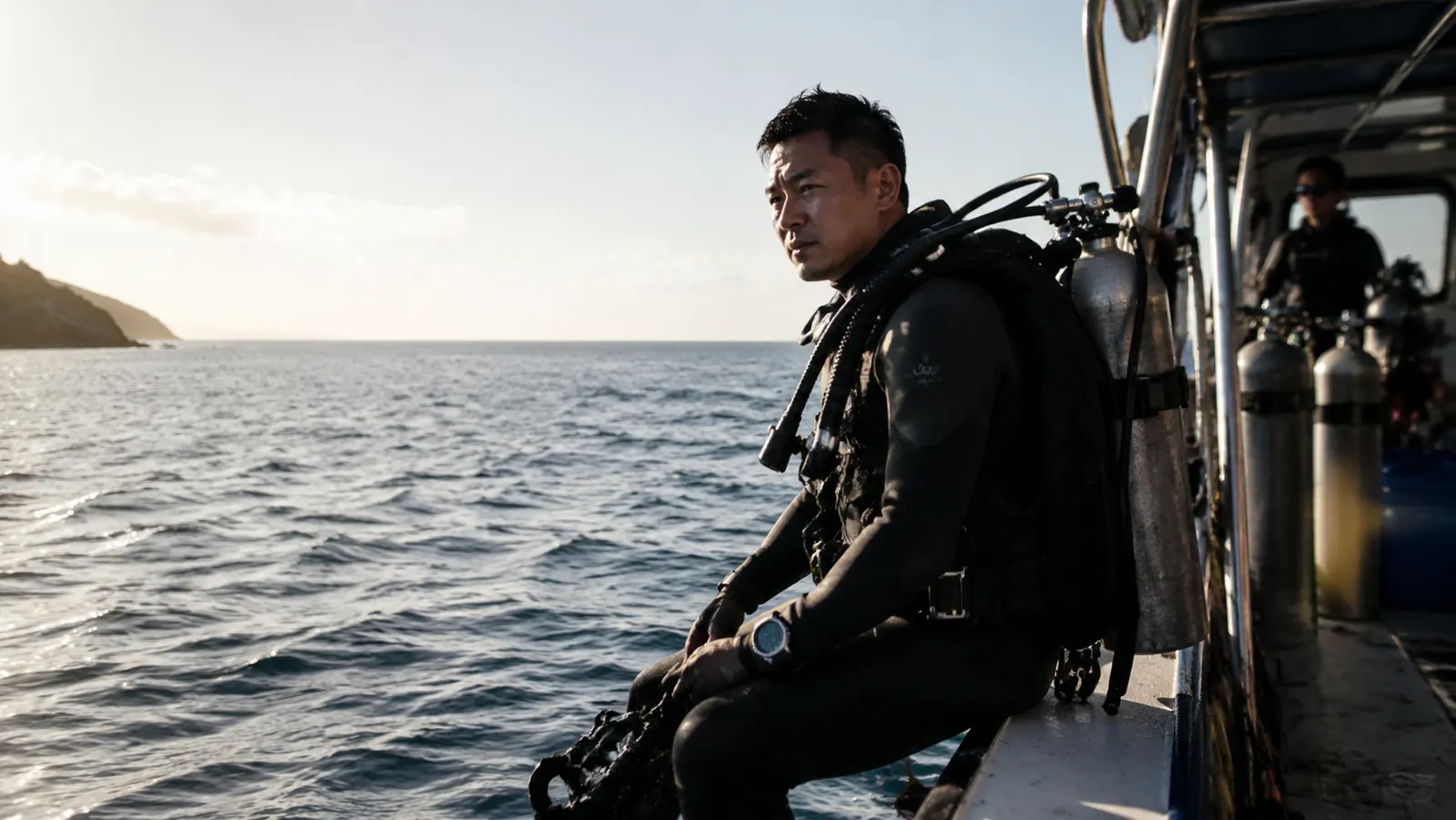
I dove ten years on rental dive computers because buying my own felt like a luxury I'd get to someday. Four days into a week of wreck dives off the North Carolina coast, that theory got tested the hard way. A rental unit died on me at about sixty feet, and that same morning I walked out of a dive shop in Morehead City with a Cressi Leonardo on my wrist. It saved the rest of the trip.
Here's what nobody tells you about rental computers. They all look the same strapped to the same wrists on the same boat, so you stop thinking of each one as a coin that's already been tossed by two hundred strangers. Mine was a perfectly decent color-screen model, the kind dive shops stock in quantity. It had been dunked, drained, salted, and left drying in the sun a hundred times, and its battery life was a knuckleball.
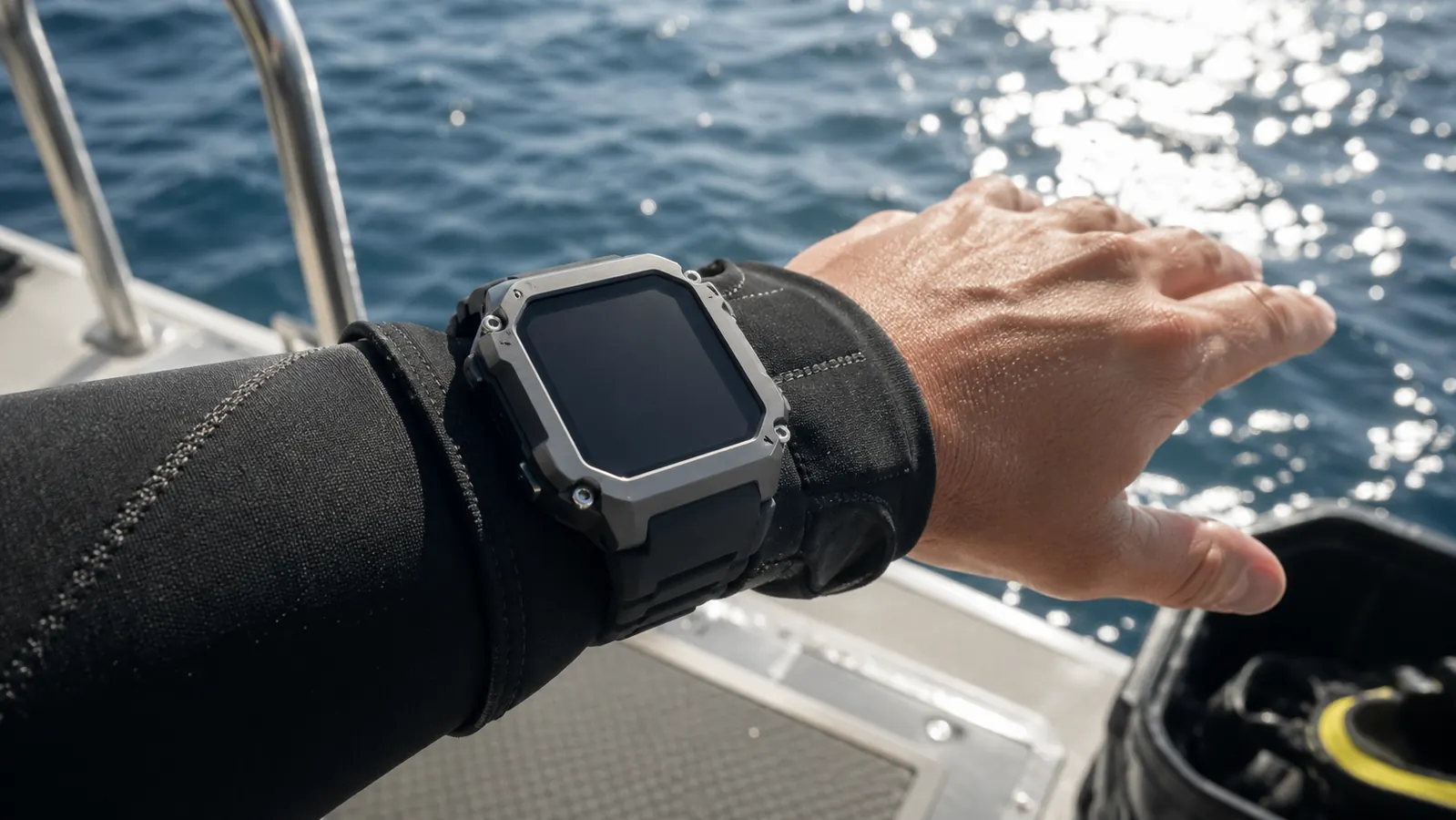
That morning it read six percent. The dive master looked at it, looked at the horizon, and said it would be fine. It was fine on the way down, which is exactly when I stopped trusting it. At about sixty feet, checking my no-decompression limit on the way to the U-352, the screen went dark and would not wake. My buddy held his own computer up so I could read the numbers, and I did the rest of that dive breathing like the gauge in my pocket was the only friend I had left.
I finished that dive cold and annoyed, having seen a lot of blue water and none of the wreck I'd driven nine hours to reach. Back on the boat I did the arithmetic every diver eventually does. The trip had cost me more than my first table saw, the hotel had my money, the boat had my days, and the only thing standing between me and a wasted week was whichever computer I was willing to trust next. That morning I decided it would be one I'd chosen myself.
The shop in Morehead City did not have to sell me anything. The Cressi Leonardo was the best-reviewed dive computer they stocked, the model with thousands of owners behind it, and a dive master up the counter told me his own had gone six years through salt water without a complaint. I don't like being sold to, and I didn't have to be. I paid, walked out, and owned the most no-nonsense piece of electronics I'd carried since my first cordless drill.
It woke up at forty-six percent battery and gave me a clean no-decompression limit on every one of the remaining dives, down to the second.
Don't Let a Rental Computer Pick Your Diving Morning
A computer you've set up yourself is the difference between seeing the wreck and watching everybody else's bubbles. The Cressi Leonardo is the most-reviewed dive computer in the water for a reason: it's reliable to the point of boring, exactly where it counts.
Amazon Check Today's Price on Amazon →The first thing the Leonardo did the next morning was wake up at forty-six percent battery and tell me, without a single alarm, exactly where I stood. It gave me a clean no-decompression limit on every one of the five remaining dives, down to the second, and it counted my safety stops for me. It only beeped when there was something I actually needed to know, a politeness most dive computers have never heard of.
By day three it had paid for itself in the only currency I care about: I did every dive I'd driven nine hours to do. There is nothing flashy about this computer and that is the point. The screen is plain, the menus are plain, the buttons are rubber and honestly stiff when your hands are cold, and it has all the visual charm of a shop calculator. It is a tool in the way a good level is a tool. Nobody compliments it, but you miss it the second it's gone.
I'll be straight about what it isn't, because you deserve better than a one-sided story. It's not a color screen you can scroll through like a phone, and if you want your computer to double as a conversation piece on the boat, there are fancier units with touchscreens and model names that sound like fighter jets. The Leonardo is the dive-computer equivalent of a cast-iron skillet. No frills, heavier than it needs to be in the way that means solid, and you'll probably still be using it when your buddies have cycled through three upgrades.
And for the record, the color-screen rental I'd limped through day one on was a model the shop had paid more for than the Leonardo retails for. It was also dead at the anchor line at the worst possible moment. Pretty never once helped me breathe easier at depth.
Back home the Leonardo lives in the dive bin with everything else I expect to outlast me, my mask, my old brass knife, the regulator I rebuilt twice because they don't make them like that anymore. I charge it the evening before a dive the way I sharpen a chisel the evening before a job, and it repays the courtesy by never asking me to baby it. Gear that respects you back is rare, and at my age I've stopped suggesting people settle for less.
What I'd Tell You If We Were Sitting at My Kitchen Table
Pull up a chair and here's the plain version. If you dive more than twice a year, stop borrowing computers. The rental unit will pick the wrong morning to fail, and on a trip you've already paid for, that is a wasted day for the sake of a purchase you were always going to make anyway. Get yourself a Cressi Leonardo, or any computer with that kind of proven record, charge it, learn it in the driveway before you leave, and treat it like you treat everything else you mean to keep. That's not marketing talk. That's what five unremarkable, perfect dives look like, and you'll feel it the first time an old rental would have left you hanging.
A Computer Is Cheaper Than a Missed Wreck Dive
Before your next trip, stop trusting a borrowed battery. The Cressi Leonardo is the most proven dive computer on the market, and it will outlast your enthusiasm for upgrades.
Amazon Check Today's Price on Amazon →