
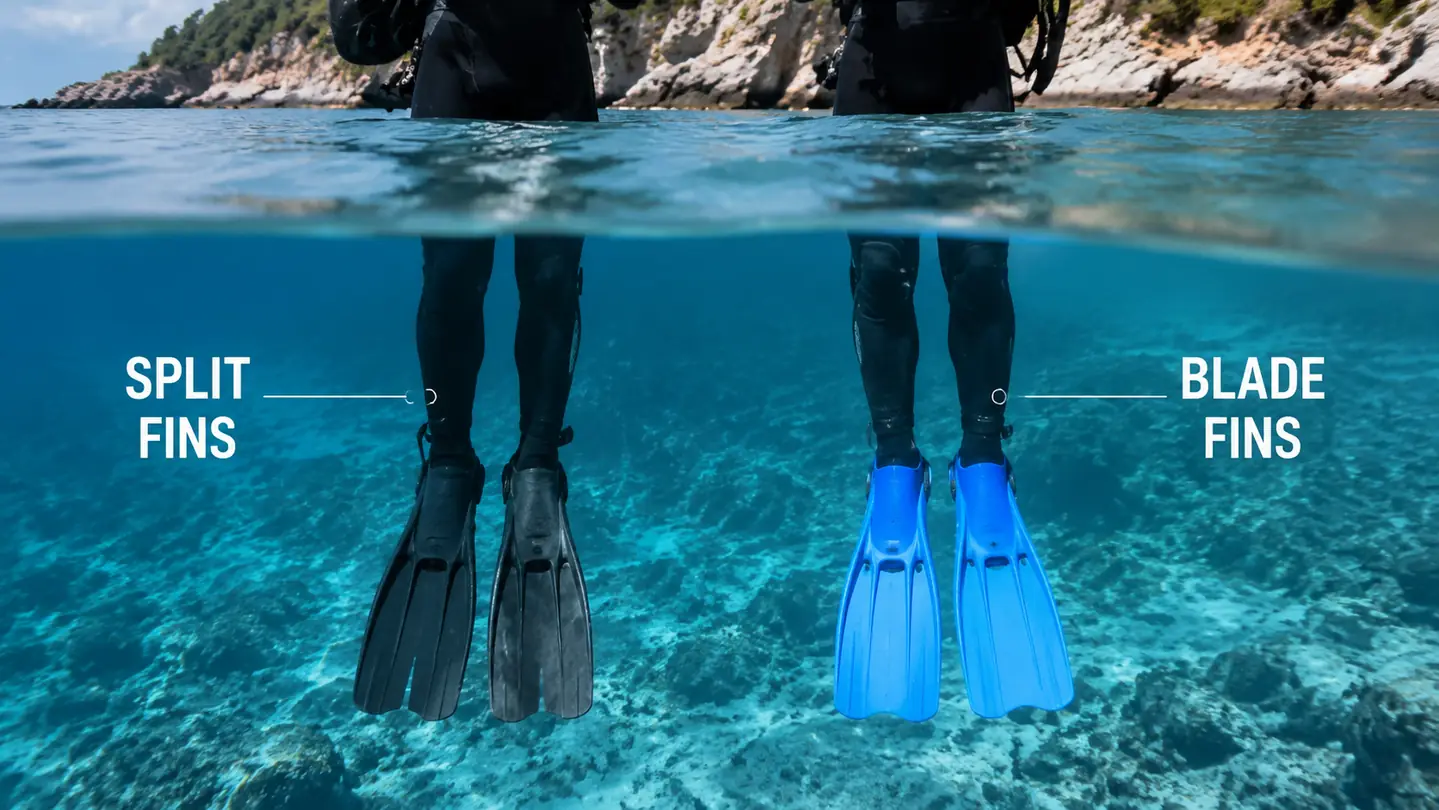
Every dive store clerk has a religion about fins, and about half of them are selling whatever is in stock this season. The question at the counter is always split versus blade, and the answer you get usually has more to do with the display rack than the diving. I am a carpenter who has been diving recreationally for close to a decade, mostly quarries, reefs, and the occasional wreck, and I have put real time on both styles of fin. Here is the short answer in case you want to stop after this: blade fins get you where you are going, and split fins are easier on tired legs in calm water. For a diver who does more than a couple of boat dives a year, I would take the blade. The one I have kicked for six seasons is the Cressi Pro Light.
The longer answer matters too, because the short one makes split fins sound like a gimmick, and they are not. A split fin has a channel down the middle of the blade that splits it into two panels. On a flutter kick, those panels bend and milk water behind you with noticeably less effort, which is where the easy-on-the-legs claim comes from. The trade is that the same channel vents water when you push hard, so a strong burst of effort slips out through the gap instead of becoming thrust. A solid blade fin like the Pro Light flexes the way a good hand plane flexes, it pushes one solid body of water backward, and that is why nearly every commercial diver and almost every technical diver is kicking a blade.
Most of the people asking me this question already own a fin. They bought a pair of rental-grade full-foot fins for a resort trip, or they are kicking borrowed stiff rental blades that left their calves cramping by the second day. The fin problem usually shows up as a body problem first: calves that knot up on the ascent, knees that ache the morning after, feet that go numb in a too-tight foot pocket. If any of that sounds like your last trip, the split-versus-blade question is really a question about your legs, not about the fins. That is why I tested the way I did, and why the table below looks the way it does.
How I tested sounds simpler than it was. For most of one season I kept the Nova 2 in my truck and the Pro Light on the boat so I could swap depending on the day's plan: a current-heavy drift at the jetty on one fin, a slow reef mosey on the other, then the same stretch of quarry on both to compare honestly. I logged every dive in a spiral notebook the way I log every job, water temperature, depth, fin, and how my calves felt coming up the ladder. That is the data this comparison is built on, not a spec sheet and not a store clerk's pitch.
| Cressi Pro Light (blade fin) | SCUBAPRO Seawing Nova 2 (split fin) | |
|---|---|---|
| Cruise kick effort | A small flutter keeps you moving, but you feel the blade working in the calves | Two panels glide on a gentle flutter, the least leg fatigue I have found |
| Power when you need it | Point it at a current and it digs in, hard kicks become real thrust | Push hard and some of your effort vents out of the center channel |
| Frog kick | Sweeps clean like a pair of oars, fine for wrecks and silt bottoms | Feels soft and flexes instead of driving water |
| Currents and drift dives | Boat dives with moving water are where a blade earns its keep | Fine in flat water, a workout when the current picks up |
| Knee and hip strain | A little more load through the joint on a long finning day | The easiest fin on joints I have used, good for achy knees |
| Durability in salt | One piece of thermoplastic, nothing to flex and fail, six seasons in | Solid build but the flexible bridge is one more weak point to watch |
| Half-kick response | Answers a crisp half-kick instantly, handy around mooring lines and wreck corners | The panels flex before they answer, so tight maneuvering feels soft |
| Long surface swims | You pay for every yard kicking a blade back to the boat ladder | Glides on a lazy flutter, a real mercy after a long dive |
| Boot and foot pocket range | Open heel with a generous strap, takes a thick cold-water boot and still sits snug | Also open heel and boot friendly, about the same fit story |
| Current price | Near the low end of the open-heel range, a workhorse price for a fin that lasts | A quality split fin usually carries a big premium over a good blade |
| Best for | The all-around diver who dives current, reef, and quarry with one pair | The calm-water vacation diver who wants the easiest kick there is |
What the Marketing Never Tells You
What nobody says at the counter is that the split fin craze rests on one single claim, less leg effort, and every other thing you hear about them is decoration. The original split fin marketing leaned hard on a propulsion trick borrowed from fish tails, and it sold a lot of fins to divers who promptly discovered the trade: the same geometry that saves your legs in flat water collapses when the water starts pushing back. That is not a defect in any one brand, the Nova 2 included. It is physics, and it is why you can read a hundred reviews where split-fin owners love them for vacation and would not wear them in a local current.
The second thing nobody tells you is that cheap split fins are the worst of both worlds. A floppy split fin costs the seller almost nothing to mold and it feels fine in a showroom because nobody can kick in a showroom. In the water, a budget split fin flexes so much that you lose both the glide and the thrust, and you end up working harder than you would in a basic blade. If you are going split, you have to spend for a good one like the Nova 2. If you are on a budget, that is an argument for a blade fin that costs a third less and asks a lot less from the material.
Where the Cressi Pro Light Wins
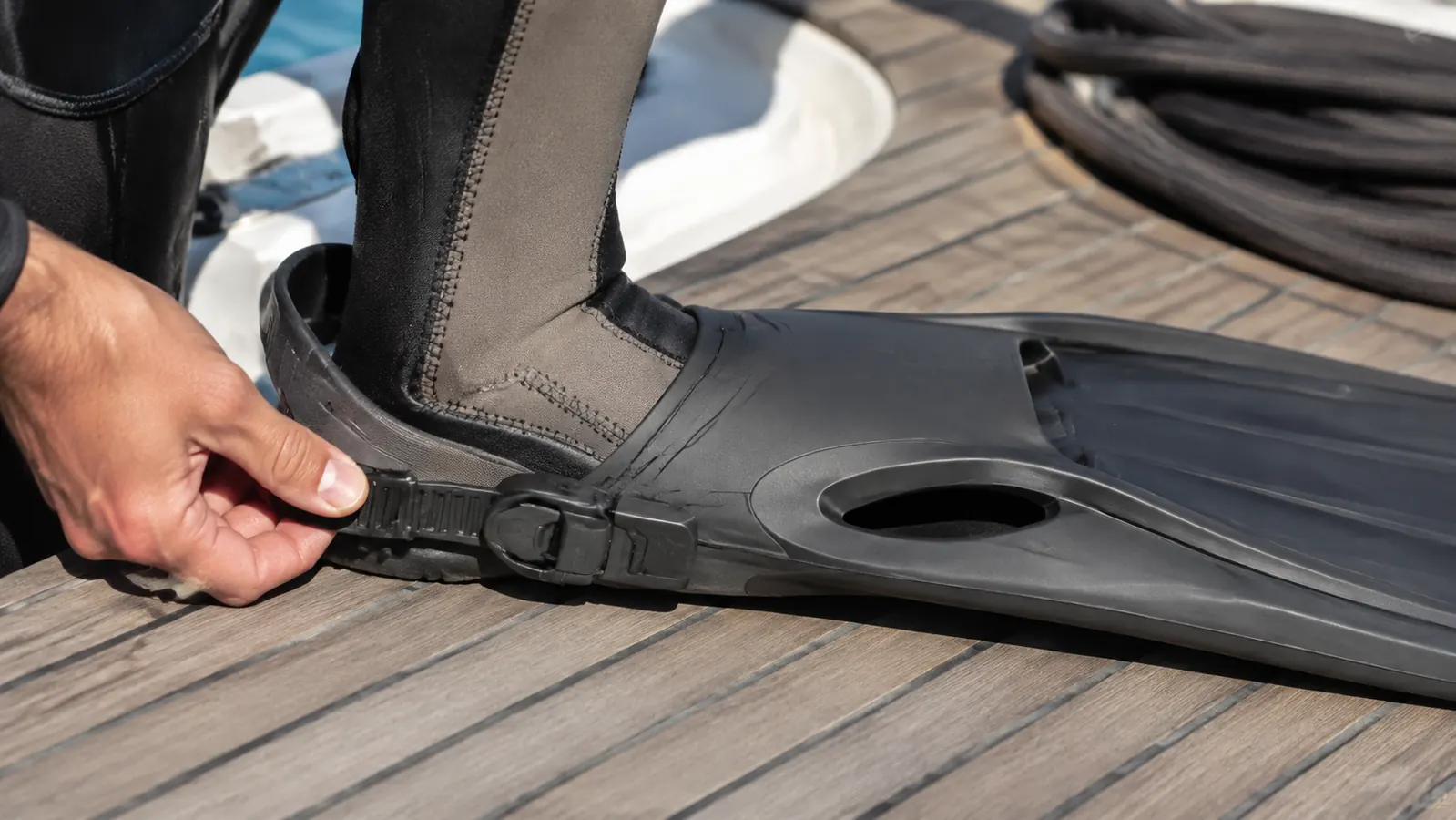
I should own my bias up front. The Pro Light was hanging on the wall of every dive shop I walked into for my first few seasons, which is how most of us end up with one. It is an open-heel blade fin molded from a single piece of thermoplastic, and that is exactly the kind of thing I respect after forty years of woodwork: few parts, nothing to rattle, nothing to break. The plastic is softer than the stiffest tech fins on the market, so it will not punish you the way a cave fin does, but there is a genuine blade in there. When a current starts pushing me back toward the boat, I can drop my kick angle, dig in, and actually move. That is the one thing a blade fin does that a split fin simply cannot do.
The frog kick is the other reason I stayed. On wrecks and along reefs where I do not want to stir up silt or spook a grouper, most of my forward motion comes from a frog kick, tucking my knees and sweeping both blades together like a pair of oars. A blade fin holds that motion cleanly. The first time I tried the same kick in a borrowed split fin it felt like pushing two wet noodles through the water, the channels flexed instead of driving. If you ever plan on a wreck dive, a night dive, or any dive where fine positioning matters, that single difference will matter more to you than every number on the spec sheet.
Salt water is the real test of anything I own, and it is where the Pro Light has earned its keep. I rinse my gear in a bucket on the dock the way I wipe down a plane after a day of trim work, but I am not religious about it, and after six seasons of quarry lime, reef salt, and a couple of hundred entries from a swim step the fin still springs back flat and the thermoplastic has not gone chalky or brittle the way cheaper blades do. The heel strap is a simple cam buckle that threads with cold, gloved fingers, no stainless spring to seize and no webbing to rot out. Give me a piece of gear with two working parts over one with a dozen, and I can show you what still works on the tenth year.

Where the SCUBAPRO Seawing Nova 2 Wins
Now for the other side, and I want to be fair here because the split fin is genuinely good at what it is for. The Seawing Nova 2 is SCUBAPRO's split fin, and it is the one I borrowed for most of a season at a local quarry before I bought the Pro Light. On a gentle flutter kick in flat water, it glides with maybe half the leg effort of a blade. You point your toes, let the two panels work, and it feels like the water is doing the kicking for you. On a long boat weekend after a week spent bent over trim boards, handing that kind of rest to your calves and knees is a real feature, not marketing.
It was the knees that honestly sold me on the Nova 2, at least for the right diver. Splitting the blade spreads each kick's effort across the joint instead of snapping it, and my regular dive buddy, who has one replaced knee, loved them on warm-water trips where there was never a current to fight. If your doctor has told you to ease off the hard kicking, or your diving happens on vacations in calm, warm water, a quality split fin is the honest choice. It is just not the choice for the diving most of us do at home, where the water moves and the bottom is fifty feet down.
Let me give the split fin its due in one more place, because it won me over there honestly. For slow finning with a camera housing or a flag reel, or any dive where the whole job is to hover and drift, the Nova 2 is the calmer fin. A gentle flutter moves you along without surging, and when you stop kicking it hangs there instead of pushing you past the barrel sponge you were lining up a shot on. My dive buddy who swore off shoreline currents now rents a pair for every warm-water trip and leaves them in the resort bag, and I do not argue with him, he dives more than I do and he dives happier. The split fin is not a lesser blade. It is a different tool for a different day.
The blade fin that has hauled me through six seasons
The Cressi Pro Light is the fin I keep going back to whether the dive is a quarry in March or a reef in August. It handles current, it handles a frog kick, and it has outlasted every piece of rubber on my bench. See today's price on Amazon and make the call for yourself.
Amazon Check Today's Price on Amazon →A split fin vents water when you push hard, and pushing hard is the only thing that matters when the current has you.
Who Should Buy Which
The decision tree I actually give people is short, so here it is. Buy a split fin if you dive mostly in warm, calm water, you want the least leg strain money can buy, and you will never need to fight a current. Buy a blade fin if you plan to dive anywhere that pushes water, if you want one pair of fins that does everything, or if you ever see yourself on a wreck or a night dive. And if you have knees or hips that complain, respect that and try both before you commit, because the fin that keeps your joints happy is the fin that keeps you in the water.
And one more thing before you reach for the card: buy the size for your boot, not the size printed on your old fin. Dive boots come in real thicknesses, from a thin three-millimeter sock up to a cold-water seven, and an open-heel pocket that feels snug in the shop can float on your foot come a January quarry dive if you ran it up a size. The Pro Light comes in the usual run of sizes and the strap has enough travel that I have worn mine with both a thin summer boot and the thick winter pair. Fins are the one thing you feel on every stroke of every dive. Get the fit right and the split-versus-blade question answers most of itself.
Price makes the Cressi Pro Light an easier door in as well. Split fins worth owning run into real money, while the Pro Light sits near the bottom of the open-heel range and still outlasts most of its class. My rule for new gear has always been the same as my rule for new tools: buy the honest, middle-weight thing that does the job and lasts, then upgrade later only if the work demands it. Six seasons in, the Pro Light has never once made me wish I had spent more, which is more than I can say for most things that come with a spec sheet.
If we were standing in my shop and you asked me to settle it, here is what I would say. Buy the fin that matches the water you will actually be in next month, not the water you daydream about. If that means a split fin and a pair of achy knees, buy the split fin and enjoy the dive. For everyone else, the blade fin is the honest default, and the Pro Light is the one I would hand you because it is the one that has been handling whatever I threw at it for six seasons with nothing more than a rinse and a dry in the shade. Fins are the cheapest part of a dive kit that you will touch on every single dive. Spend a little or spend a lot, but spend on the style that fits your legs.
Still deciding? Take the blade and don't look back
The split-versus-blade debate does not have a right answer for every diver, but it does have a right answer for most of them. If you want one pair of fins that will handle whatever dive you book next, start with the Cressi Pro Light and check today's price below.
Amazon Check Today's Price on Amazon →