
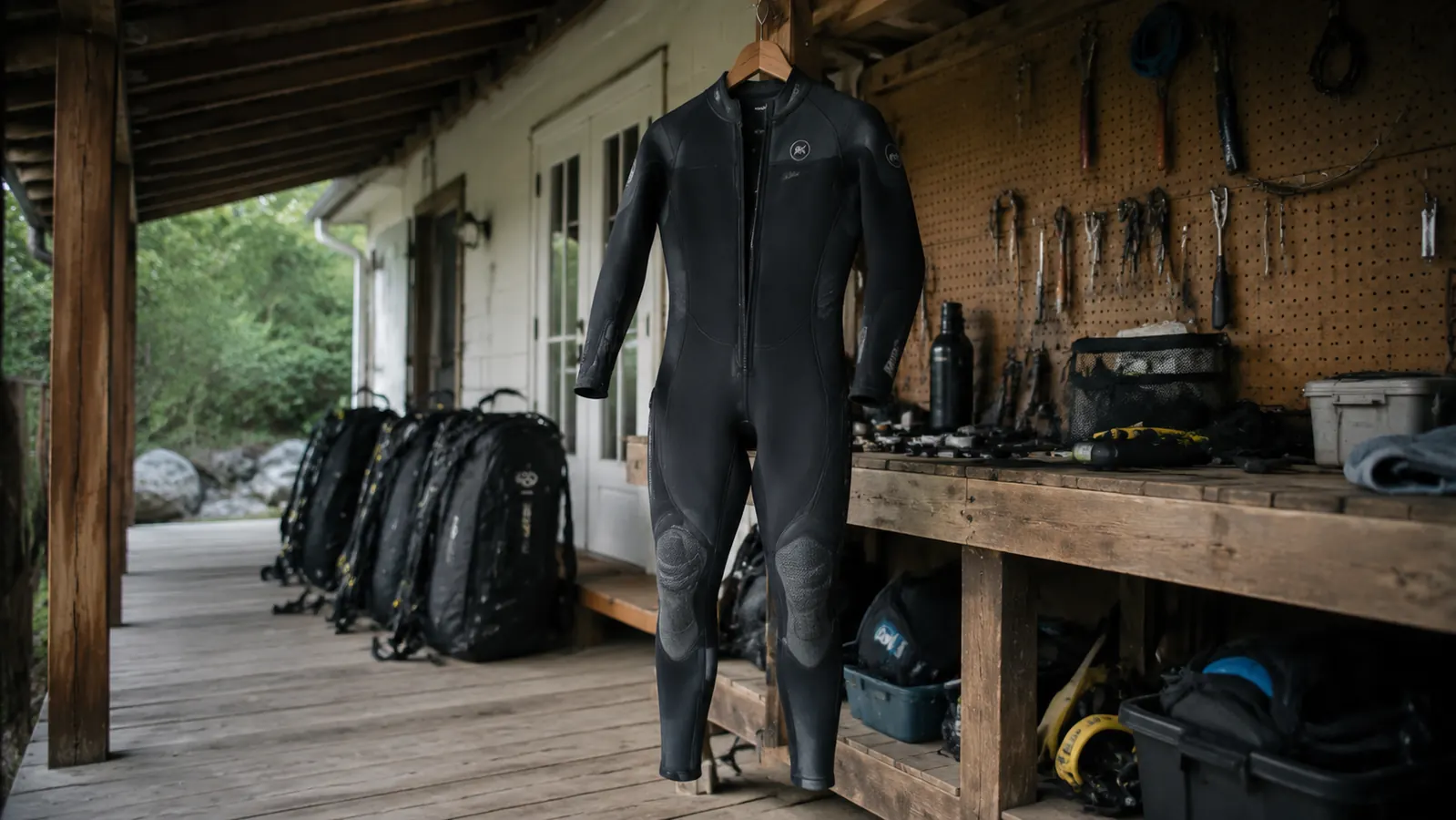
Every dive boat has the guy who treats his wetsuit like a beach towel. He peels off the suit, stuffs it into a mesh bag, and leaves it in the sun until the next trip. I was that guy for my first two seasons, and it cost me a whole suit. The foam went flat, the collar spread, and the smell never came out. I am a carpenter, and I know what happens to a tool that never gets cared for. A wetsuit is no different.
The suit I dive now is the Mares M-Flex 7 mm. After two winters of cold water it still zips one handed and still smells like fresh neoprene, mostly because I finally learned the lesson. Neoprene is foam rubber and trapped air. It does not fail from diving. It fails from salt, from heat, and from sloppy storage, and all three are on the owner, not the suit.
What follows is the system I use after every dive, in order. It is five steps and it takes fifteen minutes. It is the same discipline that keeps a chisel sharp for years. Do it every time and you will still be pulling this suit out of the closet when other divers have bought their second and third one.
I do the washing on a rest day so the suit is clean, dry, and back on its hanger, ready for the next boat. The routine has never cost me a dive. It only adds years to the suit already in my bag.
Care Sticks Best on a Suit Worth Keeping
The rinse and the dry work on any suit, but they turn into a habit when the suit under them fits well and keeps you warm. The Mares M-Flex is the suit that earned that habit from me. If you are still shopping for the suit to start with, it is the one I would look at first. Check today's price and then read on.
Amazon Check Today's Price on Amazon →Step 1: Rinse the Salt Out Before It Dries On
Salt is the biggest killer of neoprene. Sea water dries into the seams and leaves a fine grit behind, and every flex of the suit then rubs that grit against the foam fiber. It is exactly like getting saw dust into a hinge. Fresh water dissolves the grit and carries it out. The fix is ridiculously simple, but only if you do it while the suit is still clean.
A rinse tub beside the dock is the single best wetsuit tool you own, and it costs nothing.
Salt is persistent. It only wins if the suit goes to sleep still wet with it. A two minute rinse is how you win that fight.
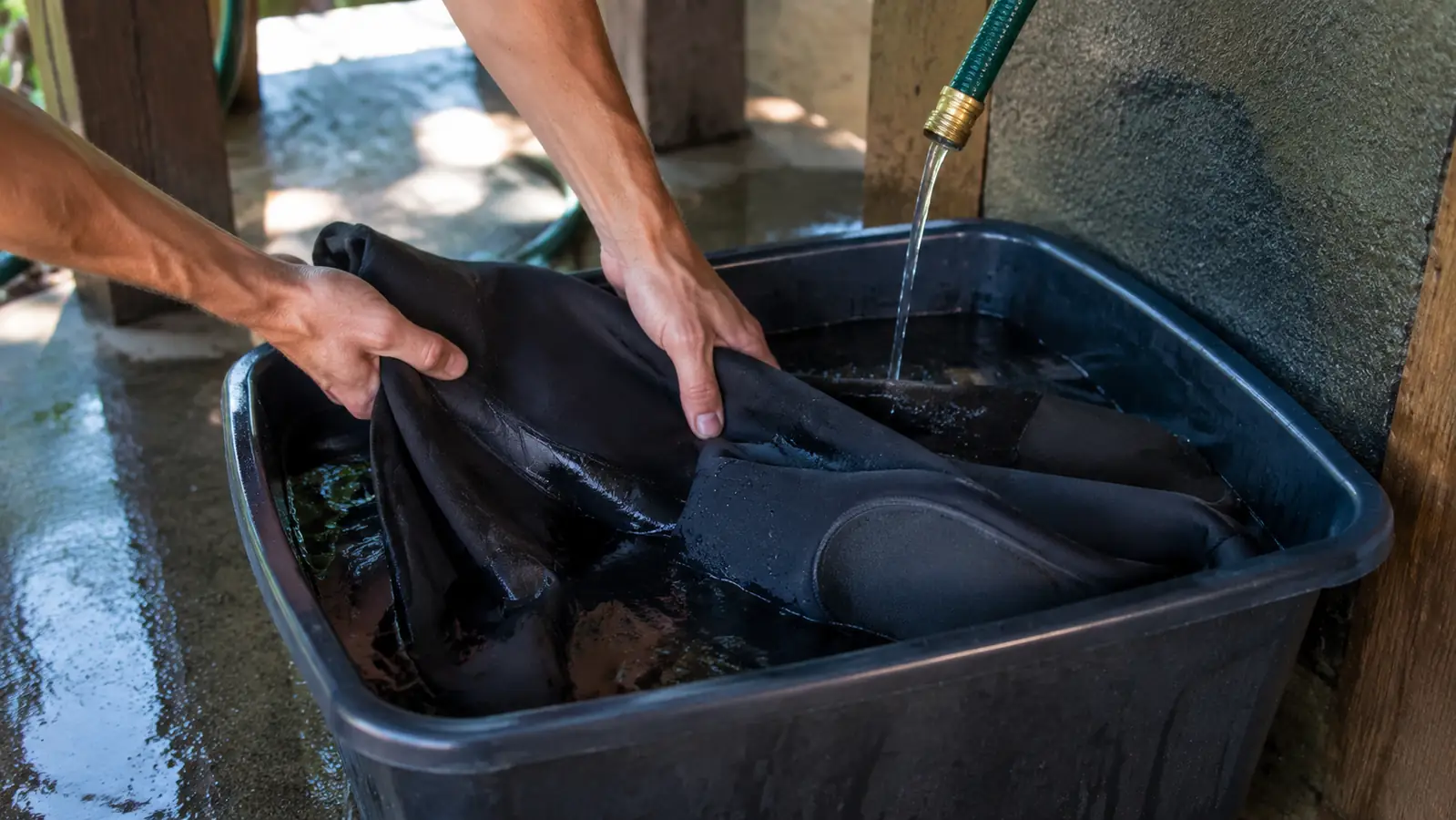
My system is a clean tub of fresh water at the boat. The suit goes in the tub the moment the dive ends, before I take the tank off. I push water through the shoulders, the torso, and the cuffs by hand for a full two minutes. The rule has always paid me: the longer we let a suit hang dry with salt in it, the stiffer it comes back.
The inside of the suit gets the same rinse as the outside. The lining holds your sweat for the whole dive, and sweat has its own salt in it. Pull the suit inside out, run the cuff under the tap, and press the water through the fabric. If the dive was sandy, go again. Salt only loses when you move first.
Step 2: Wash It Every Week or Two With Wetsuit Shampoo
The plain rinse takes off the sea salt, but sweat, sunscreen, and body oils settle into the foam and sit there. Those are what turn a suit dark and smelly, and they mark the seams. About once a week in the season I give the suit a deeper wash with a real wetsuit shampoo. The foam is the whole ball game, and the correct soap keeps it soft.
I time the deep wash for the rest day so the suit is ready for the next boat. The routine has not once made me miss a dive.
Fill the tub with cool water and a cap of wetsuit shampoo made for neoprene, then work the suit through it by hand for ten minutes. Rinse until the water runs clear, because soap left in the seams does its own quiet damage. I wash on the days between dives, so the suit is dry and ready for the weekend.
The Mares suit takes this wash all winter and comes back soft every time. Soft foam is warm foam, which is the whole reason you buy a thick suit.
Keep the dish soap and the laundry soap off this task for good. Those are built to collect oils, and a wetsuit runs on oils that stay flexible. Detergent after detergent turns the foam stiff and chalky, and no amount of oil restores it. This is a lesson I paid for once. Use the soap made for the fabric, or use very little of a mild one.
Always finish a wash with a final fresh water rinse. Soap belongs out of the seams, not left there to dry working against the glue.
Step 3: Dry It Out of the Sun, Inside Out First
The sun is the second big killer. Ultraviolet light on the wet neoprene dries out the surface foam, hardens the shoulders, and cracks the lining. A suit that dries in full sun will go stiff a season before the same suit dried in the shade. I treat the sun like it costs me money, because it does. My drying spot is the shade of the boat house, never the open deck.
The suit hangs inside out for the first few hours, so the lining that held the sweat gets the air first. Then I flip it right side out and let the outside finish. A full 7mm suit wants an entire day to dry. If it goes into the bag damp, it comes back smelly, and the smell is the foam failing from the inside.
The inside out step is not a ritual. It lets the air reach the sweat wet side first, and the lining dries in about half the time.
Thick 7mm neoprene wants a full day of air. Packed damp, it trades its water for smell, and smell is the foam giving up on you.
Step 4: Store It Cool, Dry, and Off Heat
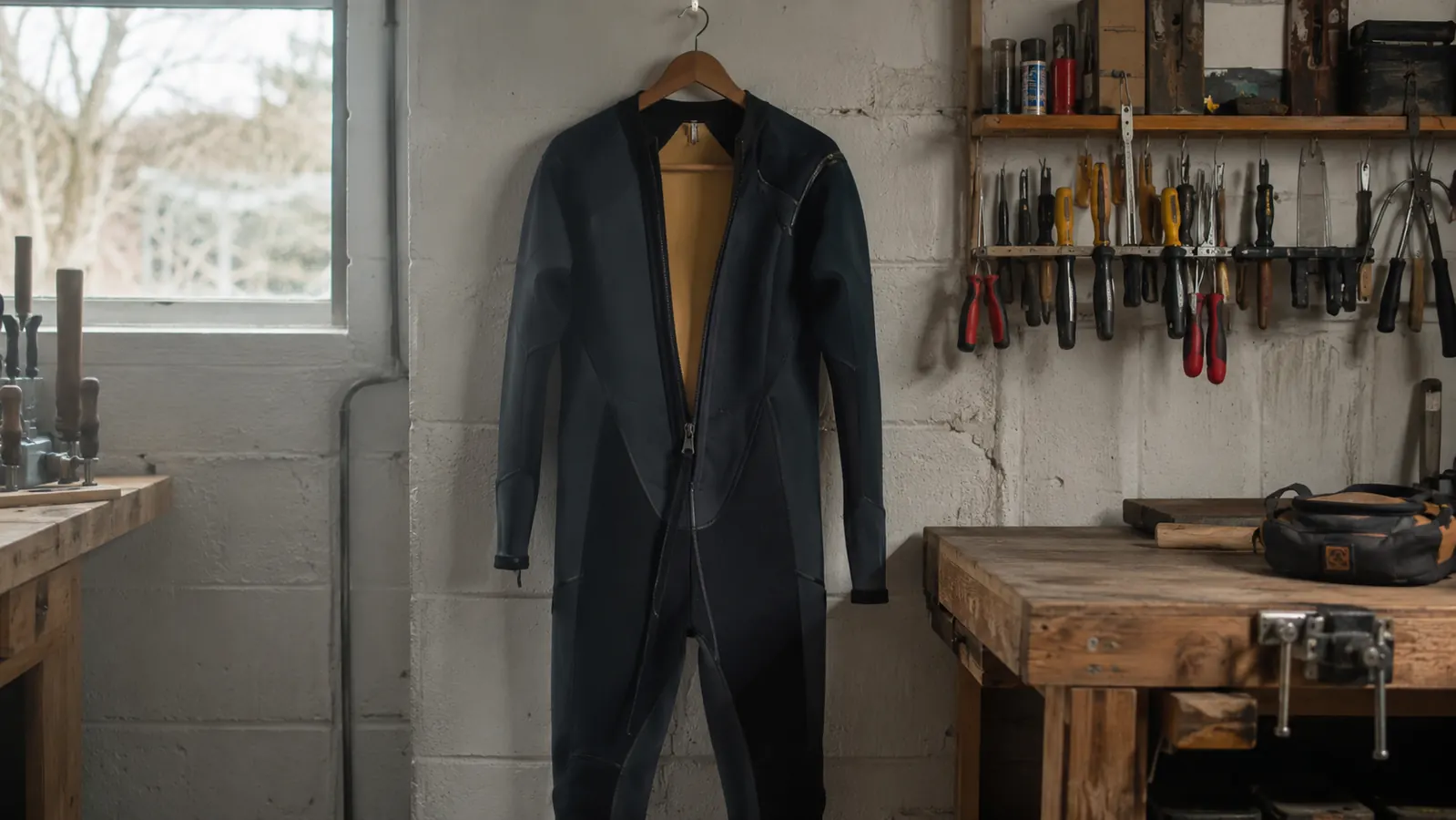
Heat is the quiet killer of neoprene. It moves the air out of the cells of the foam, and the trapped air is the warmth the suit is built on. A hot car trunk, an attic shelf, or a locker beside a boiler will age a suit by the season, even when it never touches water. I keep mine in a cool closet on a broad hanger, never folded and never under a stack of other gear.
An attic and a parked car are heat traps. Heat is the quiet failure of the foam, and it works when the suit is not even in the water.
Before the season I wash the suit once more, dry it fully, and hang it so it can breathe. The zipper stays a crack open so the inside is not sealed away. For travel the suit gets rolled, and nothing heavy sits on top. Folded foam takes a permanent groove, so the roll is the safer choice.
Off season the suit goes to the cool closet on the wide hanger, with nothing stacked on top. That small habit is the whole storage lesson, and it is easy to forget.
Step 5: Look After the Zipper and the Seams
The zipper is the only moving part on a suit, and it does the hardest work. Salt and sand like to sit in its teeth. Once the suit is dry, I run a light coat of zipper wax and pull the zipper a few times. It keeps the pull easy on cold mornings, when a stuck zipper would finish the dive before the water starts.
After the wax, run the zipper a few times. A clean pull in the cold end of the year tells you the track is healthy.
I check the seams and the cuffs last. Nicks show first at the knees and the ankles, and they only widen with use. I patch any small one with a scrap of the same material and a tube of neoprene cement. Ten minutes at the bench keeps the water out for the whole season.
The collar and the knees take the first leaks. Check them every wash and glue any nick while it is still the size of a thumb nail.
Small leaks start from small marks. A patch takes ten minutes in a dry shop, and a split seam takes a new suit, so do the math early.
What Else Helps
Keep the cleaning kit where you see it. The tub, the bottle of wetsuit soap, the wax stick, and the wide hanger all live on the shelf by my gear bag, not in a drawer. When the stuff is near the suit, the routine is easy to start; when it is in a cabinet, it is too easy to skip. In the shop I do the same trick with the oil can for the tools.
There is no mystery in the repair. It is water, a small soap, and a calm series of same steps on the same shelf every week. That is the whole system.
The final piece is attitude, not technique. Those fifteen minutes are dull, and they are dull on purpose. The diver who lasts a decade does them every single time. The diver who skips them is the one standing in the shop two years later, buying what he already owned.
A second suit or a hooded vest gives the main one a full day to rest. Two suits in rotation each get a longer life.
The care bin lives in plain sight by the bag. When the rinse is standing out, the habit is half done before you even start.
My Mares M-Flex has spent two winters in cold water and still comes out clean when I open the closet, and the zipper still slides one handed. That suit is not special. It gets the same fifteen minutes of care after every dive, even on the nights I did not feel like it.
The dive is the fun part. The rinse is the guard around the fun, and it works best when you do it the same way every trip.
The long term review covers the Mares suit itself, and the dry suit comparison settles which one fits your water. The steps here work on anything already in your bag. The foam does not care about the name on the collar. It cares about the rinse, the dry, and the cool shelf.
If the suit fits, the routine is all that is left to think about. Fifteen minutes a trip is a cheap price for a decade of cold water.
My Mares has two winters behind it and a cold one ahead because of this exact wash, dry, and store. Same suit, same rules, more dives coming.
It all adds up to one tub of water and one afternoon of shade. The suit that gets both comes back to the shore with you again and again.
Give the Suit its Care, Every Week of the Year
The Mares M-Flex is the suit I have cared for with this routine through two full seasons, and it is the one I would hand a new diver to start the habit on. The care returns the years in warmth. Check today's price and begin the care the same day it arrives.
Amazon Check Today's Price on Amazon →