
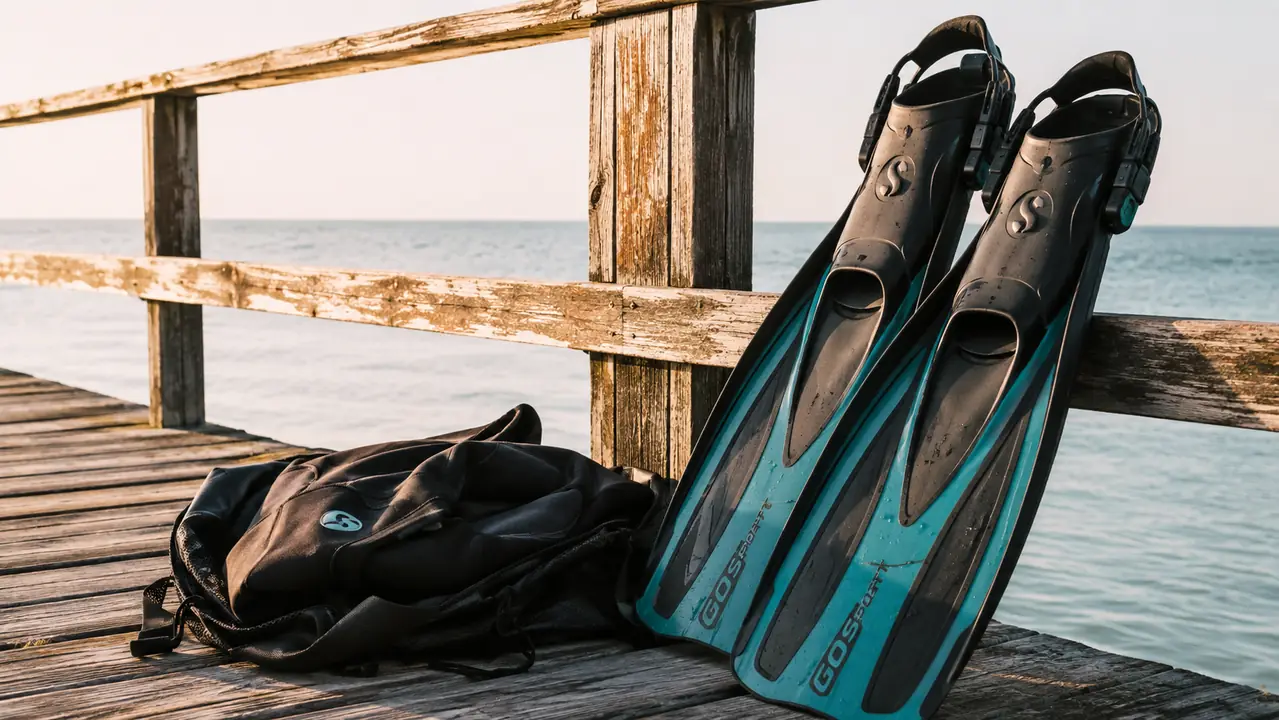
I watched a guy on the boat this spring spend ten minutes fighting a pair of rental fins over his boots, then about ninety seconds of floundering in the water before he got them sorted. He was a dentist from Columbus, a strong swimmer, and the fins were simply wrong for him. Wrong size, wrong style, wrong strap tension, everything. And there he was, blaming his own legs. I've been that guy more than once, so I have some sympathy and a long list of mistakes to save you from.
Choosing fins is the one piece of scuba gear where people buy with their eyes, and it's the piece most likely to wreck a trip. Fins matter to your knees and calves the way a good chisel matters to a mortise. You feel a bad pair in every joint by the end of the day. I've been diving for about twenty years now, mostly off the Florida coast and in the Carolina quarries, and I've owned enough pairs to fill a gear closet. The pair I keep coming back to is the Cressi Pro Light, open heel, medium blade. Here's the process I'd walk you through if we were standing at my workbench, and it's the same process I'd use if I were choosing today.
The five steps that follow are the ones I wish someone had walked me through twenty years ago, and they're the reason my gear closet holds one pair of fins instead of five. I've written up the long-term story of these exact fins in my Cressi Pro Light review and settled the blade-versus-split argument in a separate comparison, but this piece is the plain process: five steps, tested in real water, that end with the right pair in your hands instead of the flashiest one on the wall.
Skip the Closet Full of Unworn Fins
I've tested fins for twenty years so you don't have to repeat my mistakes. The Cressi Pro Light is the pair I'd buy again tomorrow, the one on every rental hangar I've ever dove from, and the pair I steer my dive friends to first.
Amazon Check Today's Price on Amazon →Step 1: Decide Open Heel or Full Foot Before You Look at Anything Else
Full-foot fins are the ones you slip on barefoot like a big rubber slipper. They're cheap, light, and fine for snorkeling and pool laps. For actual scuba, I'd skip them. Every phase of the dive, from the giant stride at the surface to the climb back up the ladder, is easier in an open-heel fin you can take on and off without wrestling cold rubber off a wet foot at the end of the day.
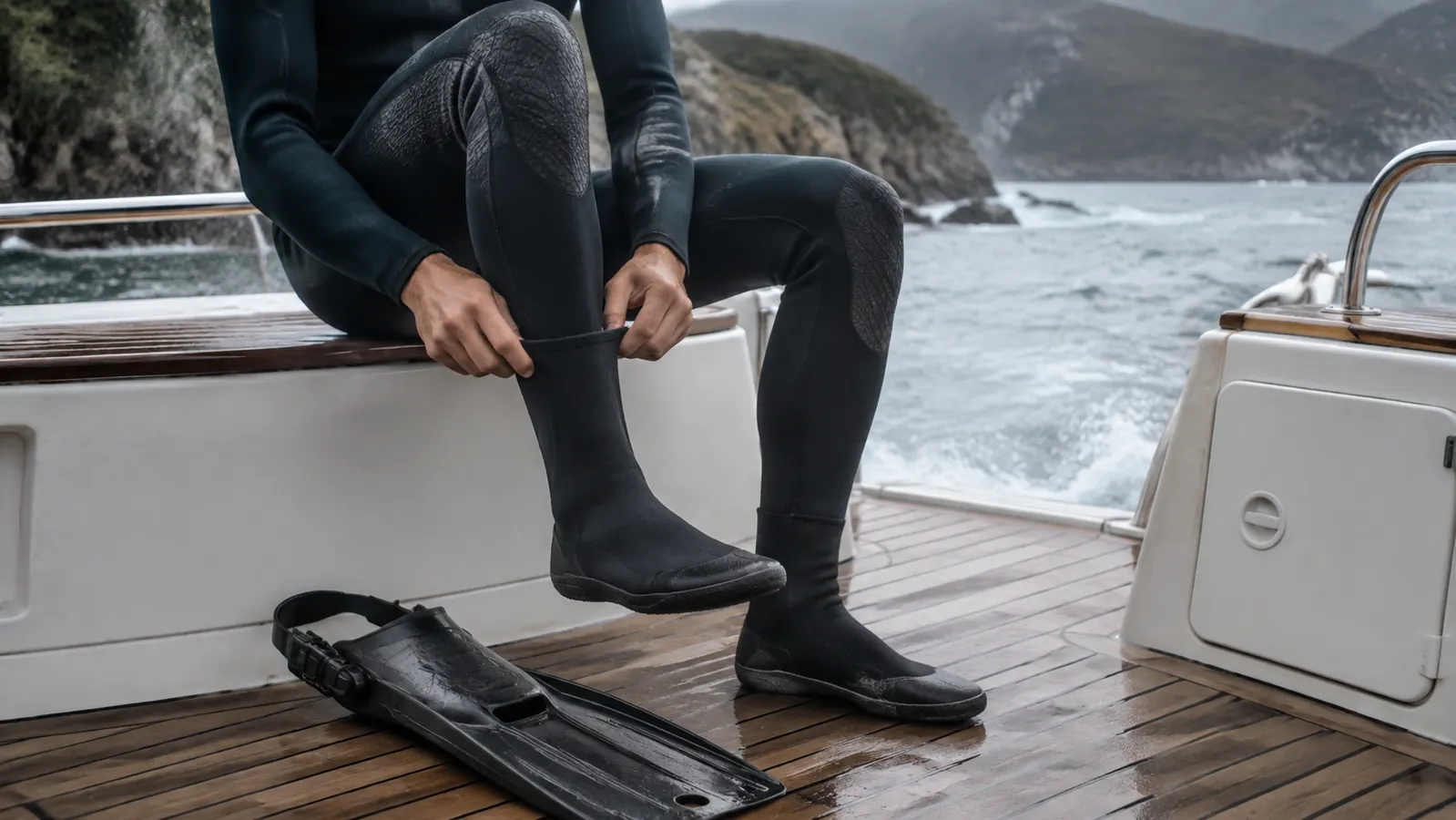
Open-heel fins have a strap and an open pocket at the back, and you wear them over a neoprene boot. That boot does three jobs nobody mentions enough. It keeps your feet warm in cold water, it stops chafing over a long dive, and it means the fin's fit doesn't depend on the exact shape of your foot. Warm feet matter more every year I get older, and a soled boot also makes shore entries and boat ladders a lot less sketchy. Once you dive open heel for a season, going back to full foot feels like driving a car with the seat halfway back.
My first few seasons I dove whatever the charter boat handed me, and the fins changed on every trip. Different stiffness, different fit, different feel at the surface, so I spent every dive adjusting equipment instead of paying attention to the reef. The day I bought my own pair, that variable just disappeared. Your own fins become a part of you in a way a rental never does. That's the quiet thing you're actually buying, and it starts with deciding which style fits the kind of diving you'll do.
Step 2: Match the Blade to Your Kick and the Dives You Actually Do
This is where the marketing lives, and it's where the arguments get loudest. Split fins promise easier kicking because the channel down the middle lets the blade flex with each stroke. They do feel lighter in the pool. What the ads don't show is what happens when you need to work, holding position in a mild current or dragging a camera against the motion of the sea. That's when splits flutter, and the ease you bought turns into a fight you have to win with your legs.
A blade fin gives back what you push into it. Kick from the hip, full stroke, and a good blade moves you steadily and predictably, which is exactly what I want on the second dive of a three-dive day. The Cressi Pro Light sits at the stiffer end of medium, and for most recreational divers that's the sweet spot. Soft blades feel easy on day one and go floppy within a season or two. Stiff blades reward a strong kick and punish a lazy one, and those are for tech divers or people who run leg days for fun. Medium gets you through everything you'll actually meet.
The other thing worth knowing before you pick a blade is how you'll spend your bottom time. If you mostly drift along a reef and take photos, you want a fin that holds a steady position without constant correction. If you do shore diving and count the swim out as part of the exercise, you want enough blade to get you there and back without dying. I'm a steady, unhurried kicker, and the Pro Light suits that temper. Match the blade to your temper, not to the shop poster.
Step 3: Get the Boot Right First, and Never Size a Fin to a Bare Foot
The most common fin mistake I see, on the boat and in the shops, is ordering by sneaker size. Open-heel fins are sized in ranges that assume a boot, and your sneaker size tells you almost nothing about your boot size. Buy or borrow the boots you'll actually dive in first, get them right, and fit the fin around them. Your boot should be snug, not tight, with no empty space at the toe and no heel lift. A sloppy boot makes the best fin in the world feel like a flipper.
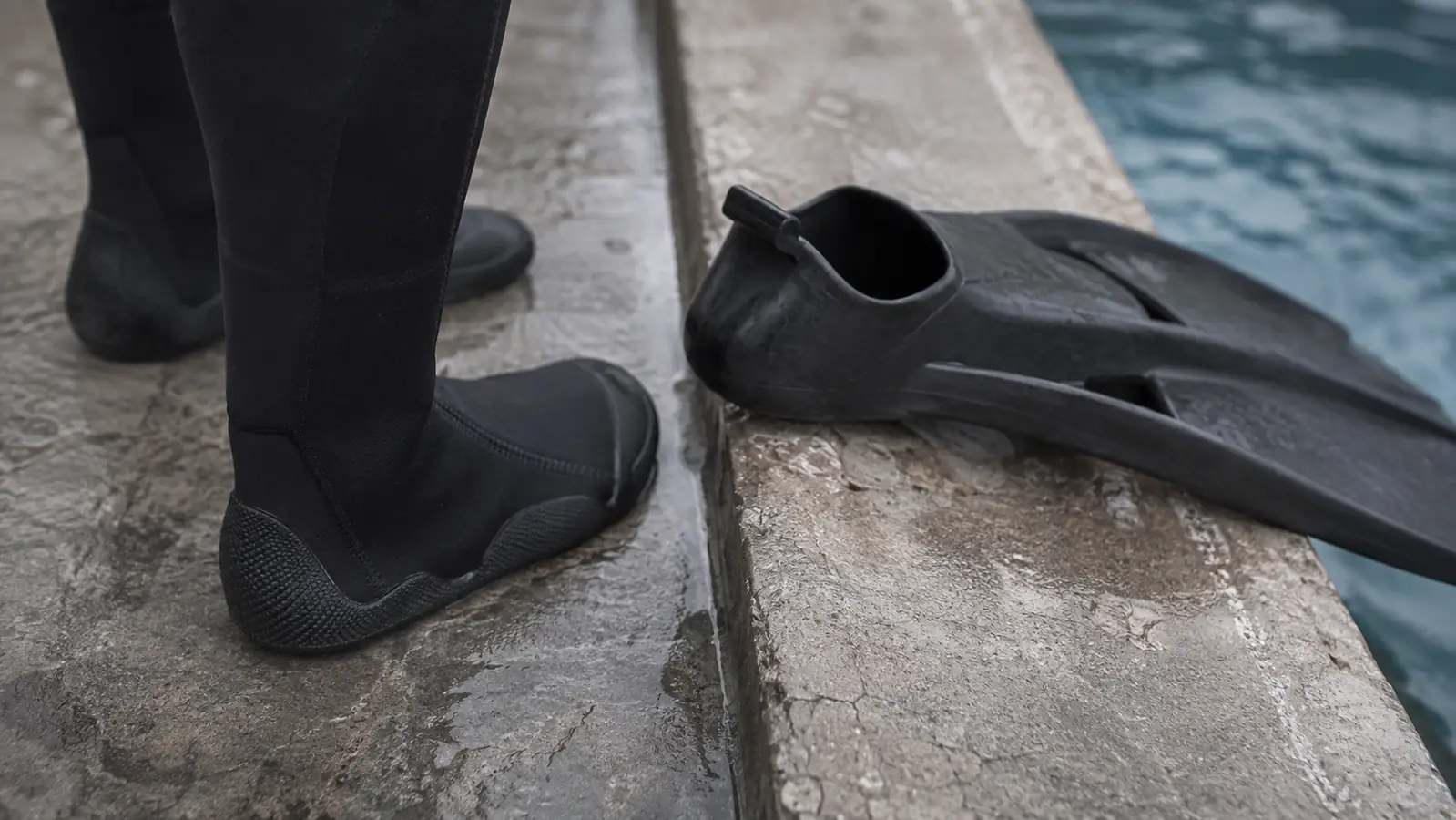
Two kinds of boots matter here. A boot with a stiff sole is the workhorse, good for shore entries, gravel paths, and boat ladders, and it does the most to protect your feet in rocks. A soft sock boot is lighter and packs flatter, but it gives nothing back on a rough entry. For the kind of diving most people do, a soled boot is the honest recommendation. It turns the fin into part of your leg instead of a thing strapped to your foot.
When the pocket cradles your boot, it should hold firm without pinching the top of the foot, and the strap should sit across the boot heel without digging in. If you're between sizes, go with the larger pocket. A fin that's slightly tight will cramp your arches around minute twenty, and you'll blame your legs instead of the gear. I know, because I did it for years. This is also the point where you read the sizing chatter in the reviews, because every model earns its own reputation, and the Cressi Pro Light thread is full of it.
Step 4: Check the Hardware That Has to Live in Salt Water
A fin is only as good as its strap, and the strap is the part that dies first. Rubber straps stretch, stiffen, and crack from UV and salt, and they tend to break right at the moment you can least handle it, usually on the way down with a camera in your hands. Spring straps, the coiled steel kind, outlast rubber by years, never stretch out, and are cheap to swap with a screwdriver when they finally give up. Even if a fin comes with a rubber strap, check that the buckles are proper stainless and that a replacement strap is easy to find.
Then flex the hinge. The groove where the foot pocket meets the blade should bend smoothly and spring back, not feel stiff at the edges or crack when you push it. I inspect fins the way I check the handle of a framing hammer, looking for the first sign of a failure before it happens. The Pro Light, for the record, is molded in Italy, which is a sentence you don't often get to write about dive gear, and the build quality is exactly why it's the fin on so many rental hangars. Light enough to pack without drama, stiff enough to do the job.
One more note on materials, since it comes up in every shop. The budget blades are injection-molded plastic, and honestly they're fine for most divers. Steel, fiberglass, and carbon blades are lighter and stiffer, and the carbon ones cost like a used car. Those matter for technical divers carrying heavy gear or for people who compete at frog kicking. For the diver doing a vacation week and a local shore dive most weekends, a well-made molded blade with a good hinge is the practical buy, and it's a whole lot easier to replace.
Step 5: Test the Pair in Real Water, Then Buy the One You'll Keep a Decade
Before you commit, dive the fin. Rent the exact model you're considering, or borrow a dive buddy's pair for a pool session, and swim for twenty straight minutes. Cramps, foot pinch, heel slip, and strap pressure all show up inside that window, and none of them show up if you only shuffle around the shop floor for two minutes. If you can't test before you buy, buy from a seller with a real return policy and be ready to use it. Fins are the one piece of gear where the first twenty minutes tells you the whole story.
Think in decades, not in trips. A good pair of fins, rinsed after every dive and kept out of direct sun, will outlast your wetsuit, your BCD, and probably two dive computers. I've had the same Cressi Pro Light pair for over five years now, through the Coral Springs quarry, wreck dives off Fort Lauderdale, and a week of wall dives in Roatan, and they're the pair I pack first every single time. That's not nostalgia. It's the arithmetic of buying the right thing once.
When you get to the checkout, you should have a short list written down from the last four steps: open heel, medium blade, soled boot, spring strap or an easy replacement, and a model with a hinge you can feel working. If the pair you're looking at clears all of it, you've done more thinking than most divers ever do, and you'll probably never buy another pair again. If something on the list feels like a compromise, walk away. The right fins are out there, and this process is how you find them.
A sloppy boot makes the best fin in the world feel like a flipper, and a fin that's a half size tight will cramp your arches by minute twenty. You'll blame your legs. I did, for years.
What Else Helps
A few things round out the fin setup without costing you anything extra. The boot is half the battle, so get that right before you celebrate the fins. Then build the simple routine: rinse the fins in fresh water after every dive, loosen the straps for storage, and never leave them in the trunk of a hot car. The sun is what kills rubber and polymer, more than the salt ever will. Treat fins the way you treat a good tool, clean, dry, stored with care, and they'll still be kicking long after your knees ask for a rest.
Buying from a local dive shop has one advantage no website can match: you can try the fins in the pool and let a human size you. Online has the price advantage and the full review stack. My rule is to use the shop for the first fitting, then let the reviews and a real return policy do the rest if I order online. Either way, do the fitting with the boots on and the pool open, not in your socks on the showroom carpet.
Start With the Pair I'd Buy Again Tomorrow
You've got the five steps now, and the honest truth is that most divers stop looking once they're in a properly fitted open-heel fin with a medium blade and a good boot. For my money, and for the last five years of dives, that pair is the Cressi Pro Light. If your list clears these steps, start there.
Amazon Check Today's Price on Amazon →